Experiences Over Things: a list

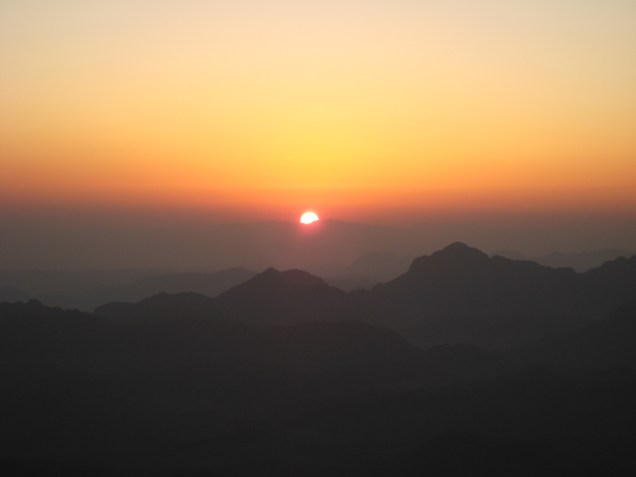
sunrise over sinaiSunrise over Mount Sinai

I’ve written a number of posts about what to bring home, but I haven’t given just due to experiences. Trends, of course, change and the millennial generation’s preferences for experiences over things is getting wide attention in the press.

For this post, I sifted through my own travel memories throughout the decades to prepare a short list of knock-your-socks-off types of experiences. Call it a “Things to Do Before You Die” list, rather than a “Places to Go Before You Die” one. There are many such lists on the interwebs, and I would dispute much of what’s there. (Case in point: you can skip the pyramids at Giza, Egypt and the rock carvings at Petra, Jordan, and still be fine IMO, but many people disagree with me.) Some of the experiences that made my list were dependent on the destination (for example, hiking Mount Sinai at dawn, which I’ll recount later in this post) and others can be created in a variety of places.

In the first example on the list, it was the combination of place+experience that puts it on knocked-my-socks-off list:

1. The Great Wall of China

I was underwhelmed by my first visit to the Great Wall. It was a busy tourist stop. There were super-sized tour buses. There were stalls selling various trinkets, such as “gold”-plated moulds of the wall. It was difficult to get a photo without tourists in it. I snapped a few and left.

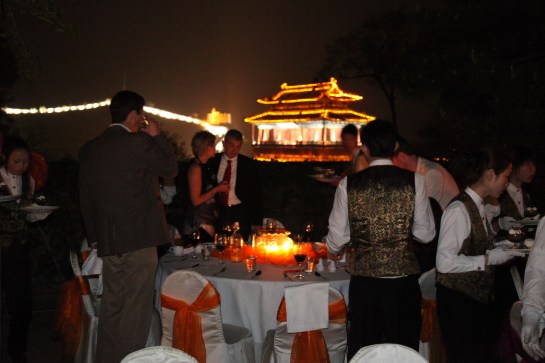
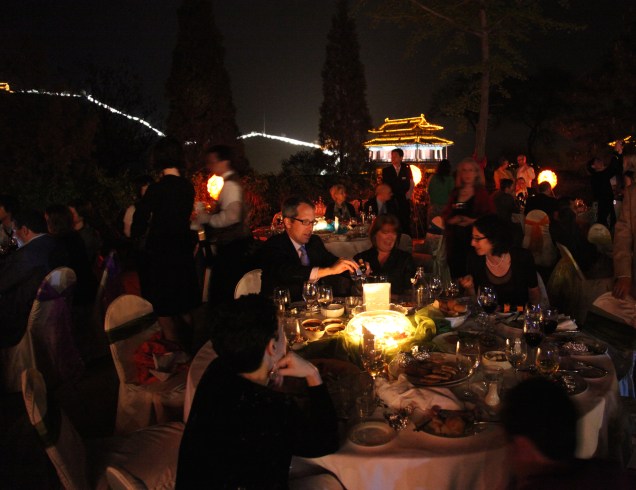
Later in the trip, my family held a double bat mitzvah reception on an area of the Wall reserved for private events. This experience deserves its own blog post, but in short… The evening began with an elegant cocktail hour on the Wall with traditional drummers and dancers. Then we were seated at round tables in a formal setup in an adjacent section of the Wall. Our tables were surrounded by lush flower arrangements and beautiful decorations. We were served a delicious multi-course Chinese meal with red, white, and sparkling wine. A mix of music played and people got up to dance. We watched the sunset from our tables or from the dance floor. Sometime after dark, some secret guy behind a switchboard lit up the Wall section by section. At the end of the party, as the guests made their way back to the chartered buses, the skies opened up. It poured and lightning bolts lit up the wall in flashes. It was the most suitably dramatic end to the night.
1188-IMG_1183

2. Paris

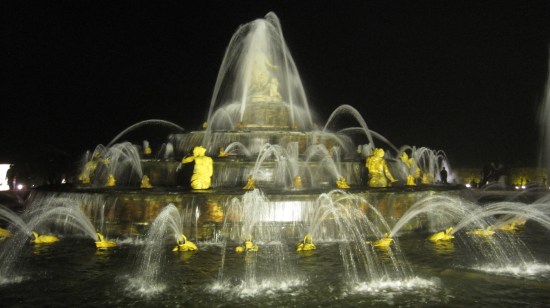
Paris is enchanting anytime, but especially at night. Pro-tip: the light show in the gardens at Versalles (a short train ride outside Paris) in the summertime is total magic.
IMG_1731

3. Prague

I’ve written some about my time in Prague. This was a function of time+place, and there’s a full-length book that will emerge someday from my two years living there. I could be walking to work any day and see some architectural detail I’d never noticed before. Or look up (instead of down at the cobblestones) and see what I’d seen many times before, but my mouth would still drop open in disbelief at the beauty and grandeur.

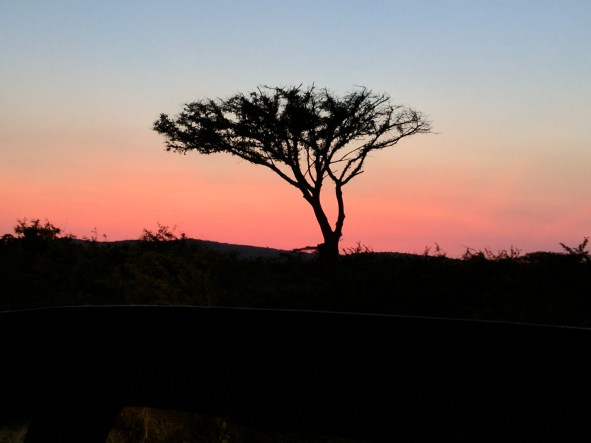
4. Safari in Africa
IMG_20180503_054819

It could be Kenya, Tanzania, South Africa, Botswana, Malawi or Zambia. You pick. There is nothing like seeing these great creatures living undisturbed on their own lands.

5. A quiet beach

Take a trip and find your spot, away from the crowds. My two favorites were in Costa Rica and Dominica, but beyond that I won’t specify. You have to find your own. On a vacation without an itinerary and with a malleable return date.

6. Oktoberfest in Munich

It was 1996 when I first went, and then returned a couple years later, so I can’t attest that the raucous, multi-cultural vibe remains the same. This experience merits its own post, but it would be rated R and names would have to be changed to protect certain people. You know who you are.

7. The Grand Canyon from the air

I was a seasoned traveler, even hardened, but when I flew over the Grand Canyon my jaw dropped open and stayed that way for a while.

8. Mount Sinai at sunrise

This is the moment captured in the photo at the top of this post. My aunt and I awoke at 3 a.m., as the local residents said we should, without a plan. We walked from our camp with its two dozen or so cabins in the desert, following the road out until we found other people on the pilgrimage. People were already out walking at that hour and the numbers grew throughout the night. We walked by a few homes and businesses. Villagers were up early, watching us, and we stopped a few times to ask where we were going. We chose a less trafficked, but steeper path up. Along the way, we hired a man for a few dollars to guide us. It was dark and cold and the path was steep and rocky, eventually heading nearly straight up. There were a few huts on landing areas on the way, serving tea and snacks. Our guide basically ended up pushing my aunt most of the way up the hill by her butt. He still turned around to give me his free hand to grab at times. We wouldn’t have made it without him. At the top, travelers from all over the world gathered and we set our gaze on the eastern horizon. We waited through hushed utterances of “what time is it?”, “which way?” When the sun peeked over the horizon, there was an audible gasp from the crowd, including me, and the sounds of shutters clicking and clapping all around. I am not a religious sort, but it was such a spectacle (nee miracle?) that it was easy to see why the ancients believed this was a holy place and why it inspired belief in gods.

9. Macchu Picchu

If you plan to go, keep an eye out as closures have been discussed.


Where were your most memorable experiences?
 

Beijing Does Food Right

1152-IMG_1038Celebrating a double bat mitzvah at the Great Wall
We ate REALLY well in Beijing. From the moment we arrived, we ate and drank our way around the city. In every photograph from the trip, we are eating or drinking: savoring a glass of wine at an outdoor cafe, slurping from a punchbowl of soup at a neighborhood noodle house, making a second (or third) trip to a buffet, or trying to find more room for yet another course at the bar mitzvah (above).

As a vegetarian, I had no problem eating anywhere, whether the restaurant was elegant or casual. Everyone seemed to understand the request.

There were many memorable food experiences. I’ll share just two of them.

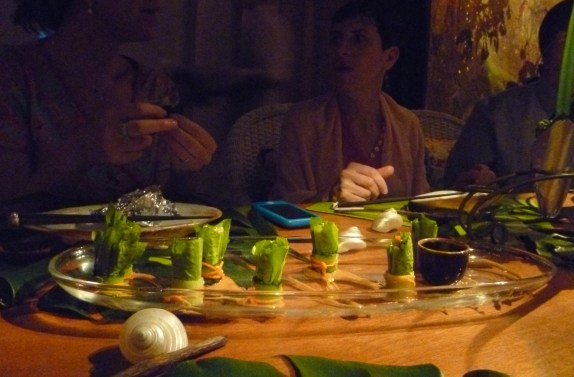
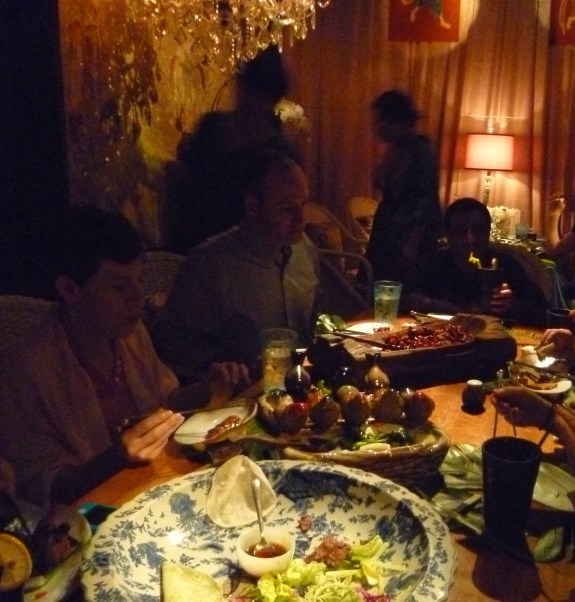
A standout among standout meals was delivered by the vegan-only Pure Lotus. We arrived on a bright sunny, afternoon and immediately removed our sunglasses. The place is dark, mysterious, and moody. It was decorated with crystal chandeliers, porcelain buddhas, filmy fabric panels, Victorian lamps. Screens lined the walls with black and white lotus flowers and petals floating across them.

We were a large group with only two vegans, but no one missed out on anything and everyone was delighted. Our efficient team of servers brought course after course and removed empty dishes promptly. They started with tropical juices, moved through artfully-presented salads and appetizers, main courses. Among the main courses was a vegan version of Peking Duck. The meat eaters had ordered it multiple times before, so I was glad to sample that.

P1000347

P1000348

We were so full we declined the desserts. Pure Lotus was pure heaven, but of the high-end (expensive) type. I went back the following night with one of my cousins and we ordered only the dessert course:-) (Note: if you are flying to Beijing specifically for this restaurant, and I recommend you do, do some research first. Happy Cow, a vegetarian/vegan website for recommendations worldwide, lists Pure Lotus as closed. There are some reviews on the larger search engines that get confusing, but there seems to be some cross attribution between a Pure Lotus and a Pure Lotus Vegetarian.)


Another experience to consider — and this applies to many places — is a cooking class. Again, it was easy to find a vegetarian option for this in Beijing. There were a number of companies offering cooking classes in the Beijing’s old-style neighborhoods, called “hutong”. One way to experience a hutong from the inside is through a cooking class.

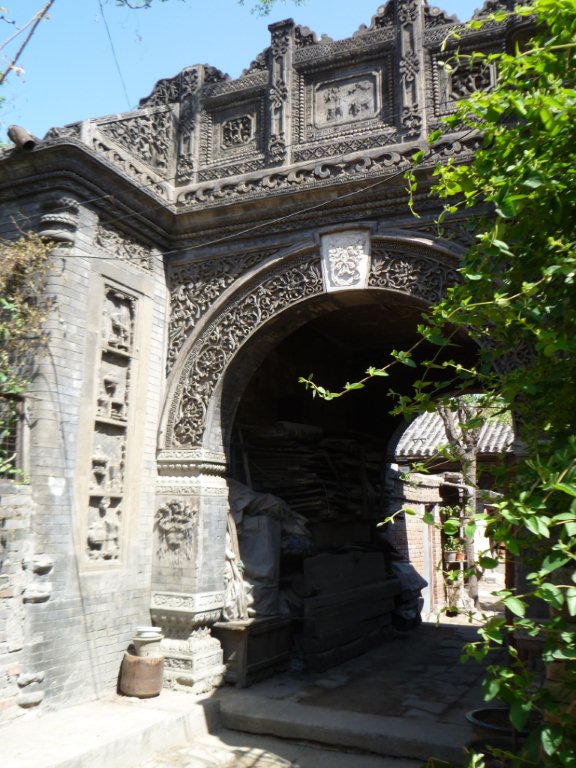
P1000425Ancient gate marking the entrance to the hutong where our cooking class was held
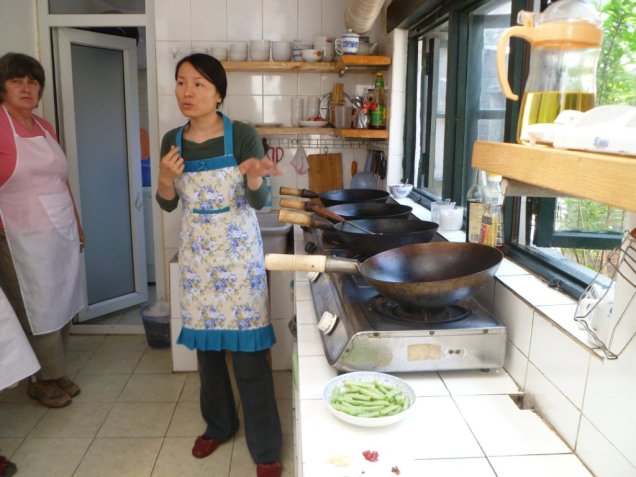
There were five students for class: three in my party and a young European couple. We stood around a table in one room for instruction. We chopped vegetables and mixed our sauces before moving to the kitchen.

P1000436Our lovely hostess warming our woks. She had white rice already going in a rice cooker.
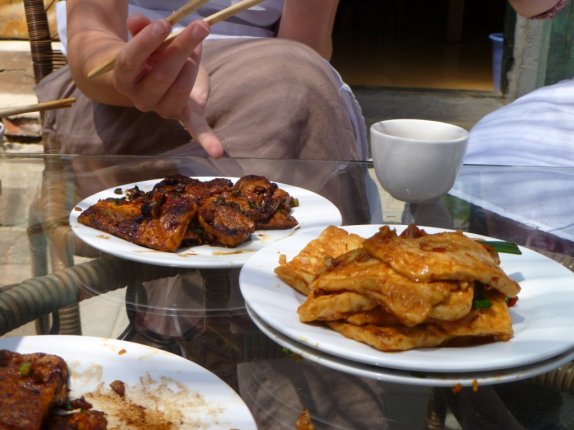
P1000439Tofu prepared three ways!

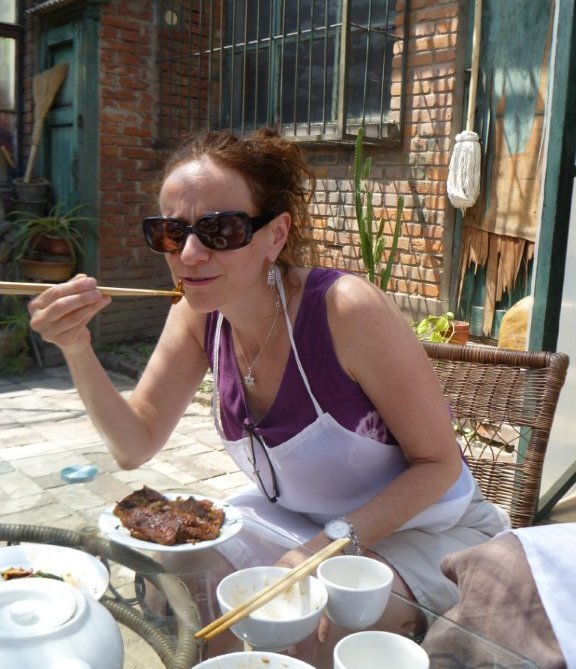
P1000440We ate the results, with tea, in the small courtyard outside.
The landscape of old Beijing is rapidly disappearing as the authorities destroy these old neighborhoods, dating back to the 13th century, to make way for modern architecture. Reports say 90% of hutongs have disappeared over the past 20 years. Countless families have been forcibly displaced, along with their way of life and social structures. It’s quite sad.

Hong Kong Before China

Park Hotel brochure

As I write this, Hong Kong is in the news. There have been massive protests on the streets by some accounts, the largest the world has ever seen. Since Britain returned Hong Kong to China in 1997, there has been significant change there, no doubt. However, Hong Kong has its own set of rules, allowing the people to enjoy some freedoms those in mainland China do not. The center of the June 2019 protests is a fight against extradition to mainland China of Hong Kongers suspected of crimes. For the people of Hong Kong, the prospect of facing China’s system is enough for great numbers of them to take to the streets.


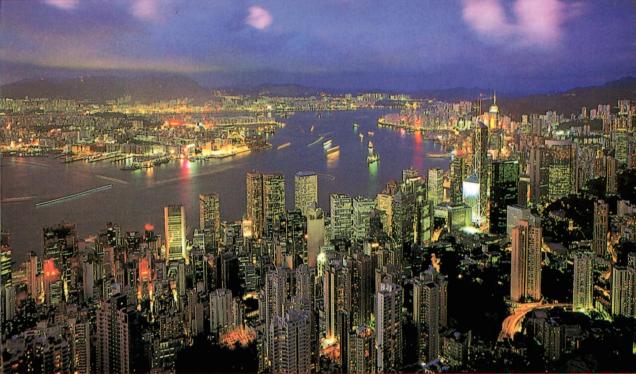
I was fortunate to visit Hong Kong in a different era. It was 1991 and Hong Kong was still ruled by the British. It felt very much un-British-colony-like and very much like free Hong Kong. Indications of the British were noticeable in the form of high tea at the hotels and bi-lingual signs. (We did not see those on our visit to mainland China that year.)

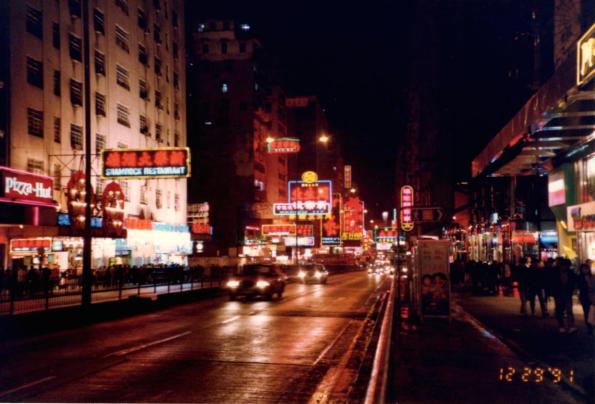
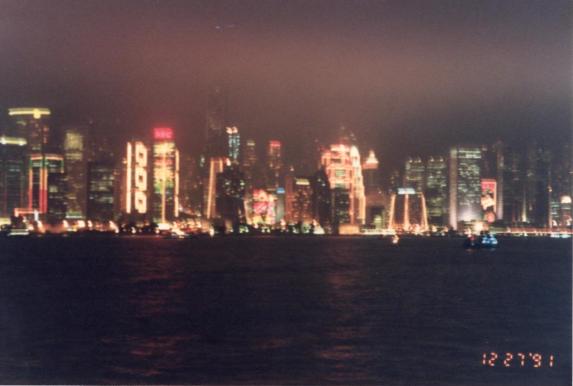
nightIn my grainy photo from 1991, note Pizza Hut at the left of the photo and a blurry “Shamrock Restaurant” sign to its right.
In 1984, seven years before my visit, Britain had agreed to return Hong Kong to China, so everyone knew it would be going back in 1997. Back then, China was mostly a mystery to those of us in “the West” — still quite closed and with its industrial revolution just beginning. In connection with the transfer of Hong Kong, China agreed to a “one country, two systems” policy. But Hong Kongers and the rest of the world were still waiting to see what would happen. There was a good deal of anxiety.


On Christmas Day, 1991, we flew into Hong Kong’s Kai Tak Airport. Kai Tak was closed later to make way for a larger airport, but to my eyes, it was completely modern. My partner’s parents were living in Japan at the time, so, along with his younger brother and girlfriend, we all met in Tokyo the night before to partake in a hazy, jetlagged Christmas Eve dinner at the reasonably-priced, but very Western New Sanno Hotel. (The New Sanno is for U.S. military travelers so for everyone else, no dice).

The next morning, we took a shuttle bus to Narita Airport. As we were bound for Hong Kong, I was practically bouncing off my seat, annoying everyone else, who wanted to sleep.

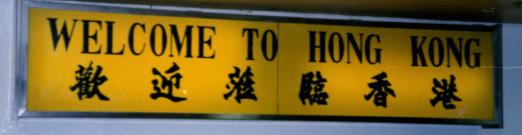
Kai Tak Airport was known to be one of the most challenging landings in the world for pilots. On the approach, planes had to fly very low over the skyscrapers on the Kowloon side of Hong Kong. We made it fine. Hong Kong immigration officials placed a royal-looking stamp in our passports (the seventh one in my collection) and we were greeted by this sign:

welcome

In advance of the trip, I had read my guidebook cover to cover, dog-earing pages and highlighting sights, markets, and shrines I wanted to visit. The guidebook had informed me that the period around Christmas and the New Year is a festive time in Hong Kong. Only a small percentage of the population was Christian, and it was my first Christmas party in an Asian country, but not my last.

By the time we arrived at the Park Hotel, one of the many sky-high buildings that cluster on the Kowloon side of Victoria Harbor, it was dark. I could feel the electricity in the air as we alighted from the airport taxi.

Everyone in my group was tired, but I was pumped with adrenaline. When everyone retired to their rooms, I was taken aback that no one wanted to join me. I could not even imagine sleeping. Why sleep? We were in Hong Kong before it was China and there was a party outside.

I left my suitcase and purse in the hotel room, stuck the room key in my bra, and went out into the strange, new city alone. At 22, I had already acquired the habit from college in Washington DC of not carrying a purse on city streets. But at that age, it was uncharacteristic of me to do anything alone.

Hong Kong! Bright, loud, and too tantalizing to miss. At that hour of the night whatever it was: 10, 11, 12 midnight — it seemed the entire population of 5+ million was out on the streets. People of all ages gathered in small parks, strolling, talking, and laughing. Toddlers careened around the city sidewalks littered with confetti and spent party favors. Fireworks exploded in the night sky while kids waved sparklers, lighting up each other’s grins. Senior citizens sat chatting on city benches as small firework fountains danced near their feet. Strangers smiled at me.

I had left my camera in my room as a safety precaution  one that was unneeded. But I knew that photos wouldn’t capture the nighttime festival, especially on my instant camera. A camera still can’t show joyful chit-chat, faces lit in a split-second of fireworks, smells of burnt toast and scorched marshmallows, and easy laughter.

I don’t know how long I wandered around the streets in a daze, marinating in the scene. No one seemed to be going home anytime soon. Eventually, I had to surrender to the jetlag. Back at the hotel, I descended into a deep restful sleep until my body allowed me to wake again. I missed the breakfast buffet the next morning.

dinner cruiseView from our harbor cruise on the Pearl of the Orient
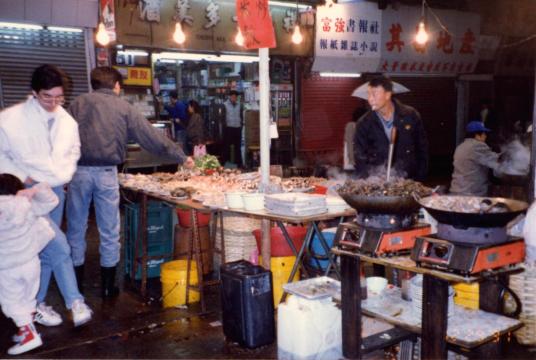
We spent a week in Hong Kong. It was was an amazing riot of Asian and British cultures. Lanterns and streamers festooned the streets. Charcoal grey worsted wool adorned Asian and English businessmen. English was spoken freely in the broad avenues, shops, and restaurants. Among modern, grid-like neighborhoods, pockets of narrow, jumbled market streets cropped up, offering colorful craft shops, steaming drums of soup, and seafood laid out in icy sidewalk bins.

fishThe shellfish was so freshly harvested from Victoria Harbour, it still pulsed. I stopped eating it.

When I got home and sent in my film cartridge to be developed, the developer lost it. I was very upset, as it was still early in my travel “career”. So I have very few pictures of Hong Kong and it is mostly left to my memories. In them, it is always nighttime and there are bright lights and fireworks. It’s fine with me.

~~~

Note: while researching this piece, I found this interesting story about Kowloon’s former lawless squatters’ city within a city. This place was not mentioned in my guidebook from 1991. The squatters’ city was demolished in 1993, but it is the type of site I would visit today. I wrote about a small squatters’ community in Addis Ababa here.


Rijsttafel (Rice Table)

800px-Rijsttafel_Den_Haag_Javastraat

Photo credit: Wikipedia

The Indonesian rijsttafel — a Dutch word that translates into English as “rice table” — is an elaborate meal adapted by the Dutch following their colonization of Indonesia. The politics of European imperialism aside, rijsttafel is a concept you’ll find in Amsterdam, not Indonesia. It is a fusion cuisine offering a variety of small dishes with spices and flavors that I have not experienced elsewhere on one table. It’s also darn difficult to find in other large cities that normally have all you could want on offer.

Here is the pronunciation of rijsttafel in phonetics: /ˈɹaɪsˌtɑːfəl/. Did that help? Ha ha. I listened to several audio versions of it online and they were all different. In one case the initial r was very notably rolled, but not the others. The j is pretty hard, making the first syllable sound like “ridge” or a slightly softer version of it. The “a” sounded different in every version I listened to, so I will leave you to your imagination with the rest.

I first had rijsttafel (“rrizh-stahffl”) two decades ago in Amsterdam while on a business trip. I was staying in a charming little hotel on lovely Vondelpark and my Dutch colleague took me to Kantjil for dinner. Wonderfully, Kantjil still exists! It does not have the highest ratings of the rijstaffel places on Yelp, but I would give it a chance.

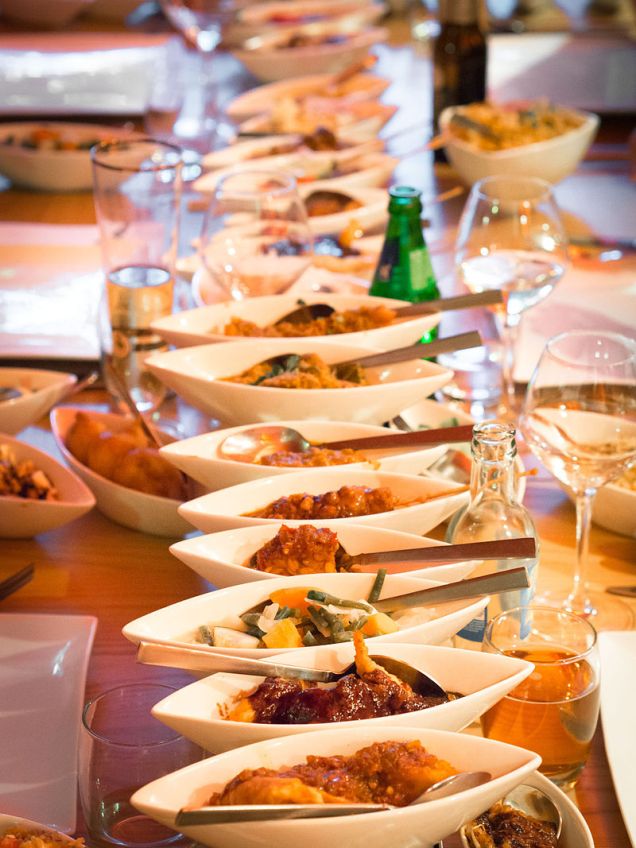
It was an experience that stuck. Rijjsttafel was my primary objective when I returned to Amsterdam 15 years later.  Our hotel was not in the city center, so we decided to try the highly rated Blauw. Blauw also happens to be the restaurant featured in the Wikipedia listing for rijsttafel (photo above).

Again, the meal was memorable. I will also mention that my dining partner is a chef, so he tends to be hyper-critical of restaurants. He LOVED everything about it. He stopped talking, starting eating, and sopped up every last drop. The service was wonderful. They kept the food coming. The menu has English translations on it, which is always helpful, especially when you are experiencing a new type of cuisine.

The menu is long here. Go straight to the rijsttafel page. There is both a vegetarian and vegan option. Here are a few of the selections: tofu omelette, pan-friend eggplant, fried banana, sweet and sour cucumber. My companion had the egg in coconut sauce and said it was delicious.

As stuffed as we both felt at the end of dinner, of course we got two desserts to share, one chocolate and one not. Important warning: I see durian on the current menu. DEFINITELY skip that! If you are not already a durian fan — and I have never met one — it will seriously ruin your night, if not your entire vacation. Not kidding.

No durian sign

By the way, this is a “No Durian” sign. I have seen these in hotels in Asia. Sometimes the signs also specify the amount of the fine if you choose to disregard their prohibition. That’s because it will smell like something mammal in origin and MUCH larger than a durian died in your hotel room. You may be an adventurous eater, but you have been warned.


On the Cheap (and my comments on Money Mag’s annual list)

You can have the richest experiences by going on the cheap. Actually, I pretty much guarantee it.

Case in point. l LOVED Cuba.

IMG_0991

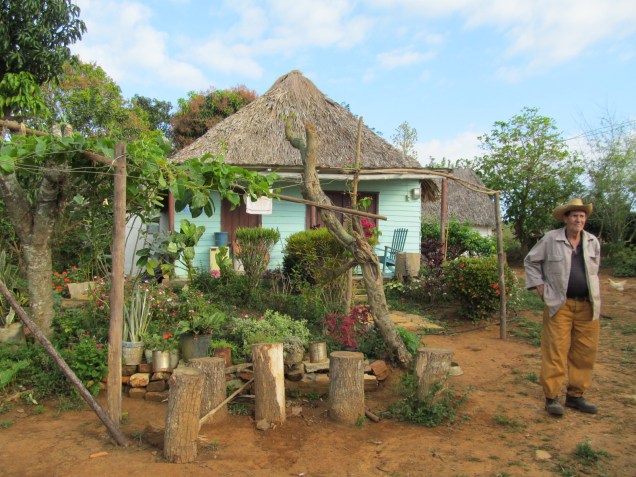
In addition to it making my list of top 5 places that I would go back to, everyone else I know who has been there has loved it too. That includes my parents who went 10 years ago; my friend who went 20 years ago; and my art teacher who moved there recently, started an art and tourism business, met a Cuban man, and had a baby all in one year! Last month, my aunt and uncle went and did not like it at all. Wha??! They took a cruise. I have written about cruises already. The ship stopped in three principal cities and a guide told them that the government embeds spies in the neighborhoods who watch everyone. And THAT is what they remembered. I told them I was in cities, villages, and on farms and met dozens of Cubans. I spoke to them in Spanish and we had a few English-speaking (Cuban) tour guides. Not one of them mentioned a plague of neighborhood spies. What did we talk about? The politics of Cuba, the political positions of the U.S., racism in Cuba, Russia, Venezuela, art, health, sports, food, music,… You get the idea. I loved it. You can draw your own conclusions, but if you are considering going, just DO. I should apologize though, as the theme of this post is “on the cheap” and it is not easy to go there cheaply. To do that, you will need to go on your own (not on a tour). This process is too detailed to write about here and the U.S. government regulations change fast, so research this thoroughly before attempting it.

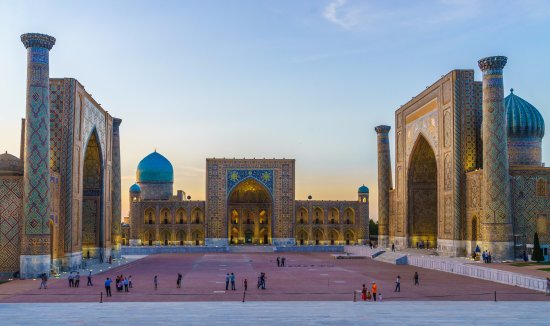
Money Magazine publishes a great list of 20 affordable spots you can check out. I will comment on some of their choices. Of course, there are many more than 20 wonderful affordable spots. If you do a little research on, say, Central Asia, you will find spectacular sites with relatively few tourists. Here is one such example:

registan-square-samarkandSamarkand (photo credit: TripAdvisor)

On to Money Magazine’s list… I am going to skip their U.S. destinations, as it’s not my expertise. Here are my selected comments on their international destinations:

  1. Meknes, Morocco – My group of four did not love it. However, another friend did. Go figure. Nearby Roman ruins of Volubilus are totally worth a visit. Fez, with the largest medina in the world, is fascinating. I call Fez a MUST do, though overwhelming.
  2. Cozumel – I dunno. I’ve been to Cancun, Tulum, and Playa del Carmen, but not Cozumel, so I’ll pass on this one.
  3. Havana – see the first half of this post.
  4. Montreal – not sure why it’s on this list. Your call.
  5. Nanjing, China – I’ve been to Beijing and Xian and they blew my mind in a good way. I’ve mentioned that Shanghai is on my places to go next list, but mostly because I have a friend who is moving there, so maybe I’ll put this one on my list with it. See #10 below. However, the photos of Nanjing look promising.
  6. Monteverde, Costa Rica – I would recommend just about anywhere in Costa Rica. One of my top 5 of all time.
  7. Medellin, Colombia – never been.
  8. Crete, Greece – I’ll give this one a mildly interesting. The weather was not great when we were there, so we did not go to the beaches. However, would not have changed my reaction to the ruins at Knossos. Just ok.
  9. Prague – As I have such a deep love for Prague, I find this one difficult to talk about. From an architecture perspective, there is no place like it. However, it is overrun with tourists at all times of the year.
  10. Tainan, Taiwan – I have not been there. However, Hong Kong’s night markets and Bangkok’s flower markets get at least two thumbs up. One therefore might assume that Tainan’s night flower market is a wonderful cultural immersion experience. But I have a no-assumptions rule. The photos I looked at online appear carnival-kitschy rather than authentic, so proceed at your own risk. And please comment below if you have been!

Look Closer

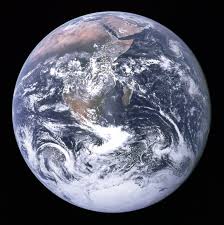
The Blue Marble

The Blue Marble

One of the things that appeals to me about travel is that you board a metal cylinder and pop out the other end in a different world from the one you left. When I was early in my travel experiences, I found that as I traveled more, I craved even more different worlds from my own on the other end.

Growing up in the United States, my journey began with dips over the northern border (to Niagara Falls) and the southern border (Tijuana, when it still considered pretty safe). I moved to Eastern Europe for work when I was in my upper twenties. At the time, I had a two handfuls of countries under my belt. I was determined to see as much of the region as I could while I was there. After two years, I moved back home and  took a job in Boston that offered opportunities to travel to Western European countries. It was not enough and after two years I took a job where I supported a small set of Latin American countries. Five years later, I went looking for a position that offered the possibility of travel to Africa. I traveled to a dozen countries in Africa over my seven years there. Then I left that organization for a gig that put me in Dhaka, Bangladesh.

4-2B057

Christmastime in Dhaka. It’s freezing by the way.

Let’s stop there. One lesson that I learned during these years is that new destinations continued to stump me and cause wonder. I arrived in Mozambique expecting its neighbor Tanzania. It was not. I arrived in Costa Rica expecting Belize or Panama. It was neither. It was time to stop assuming stuff and just open my eyes and watch. One thing I’ve learned over thirty years of travel is that my journey is still a work in progress.

And then something else happened. It wasn’t a different world I was finding; it was the same. I leaned in and looked closer. People, families, meals together, a grown daughter’s wedding, a college graduation, holiday festivals, funerals. It was the same world, but it was wondrous for me and life to them.

Recently, I listened to a podcast interview of the first Iranian woman in space. I don’t think I had ever heard an astronaut speak so beautifully about the experience. When viewed from space, Earth has no nations and no borders and no tribes. We live on an orb of greens and browns and blues and whites. Boundaries are built by humans. And humans should tear them down.