Virgin Safari

Leading up to my trip to Lilongwe, Malawi, I was anxious for a number of reasons. It was my second trip to Africa and I had spent the first one typing in a hotel room on a dial-up internet while my team leader, a Zimbabwean doctor, took the other (male) team members to tour various health projects. My team leader for this second trip was Issakha, a Senegalese epidemiologist whom I had never met. We had a lot of work to accomplish in our two weeks together.

Issakha flew in the day after I arrived. When I met him in the hotel lobby, I could tell this trip would be different. Issakha towered over my small frame, but looked me straight in the face as he grasped my hand warmly. When the professional soccer teams started arriving at the hotel for the Africa Cup, he would watch over me with a fatherly eye.

The following day, we set off with a group of colleagues to visit a district hospital. Within minutes, we left the small capital’s city limits and soon after the paved roads disappeared into dirt.

The hospital was a two-hour drive along high grasses and thin trees. I was excited to see some effects of the work I had been doing from an air-conditioned office in the U.S. Our project in Malawi was helping to renovate a pediatric wing of the hospital. The project was nearing its end and we had found some extra funds. At headquarters, we had considered paying them out as salary to our employees in Malawi, but instead, the Lilongwe office had asked that we use the funds for the hospital. When I announced the decision to the employees in the office that morning, they broke out into applause. It choked me up and I waited awhile before speaking again. I expected to see such generosity again in the future while working in the public field, but did not. I also would find that men as caring as Issakha are rare. I got lucky.
2007_0615malawi0046

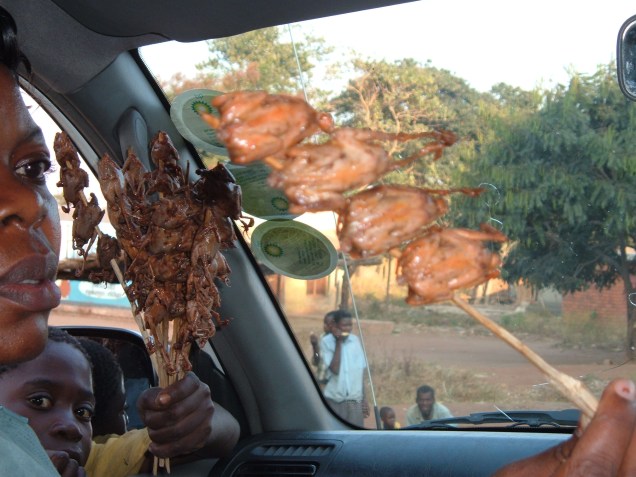
Kids selling roasted birds on skewers through our car window

When we arrived at the hospital, our driver pulled our white four-wheel-drive vehicle into the circular dirt drive. The low buildings sprawled over a large area. Random wings protruded from the central building encompassing courtyards of grass and dirt.
2007_0615malawi0003

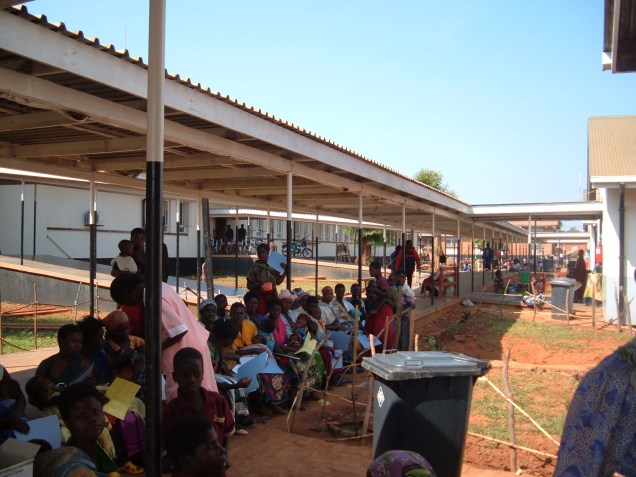
Hospital services are delivered outside and inside.

I was told that the children’s wing was tiny and unequipped. Still, I was unprepared for what I saw when I stepped out of the air-conditioned SUV. My long linen skirt fluttered in the breeze. Simmering stew scented the air.

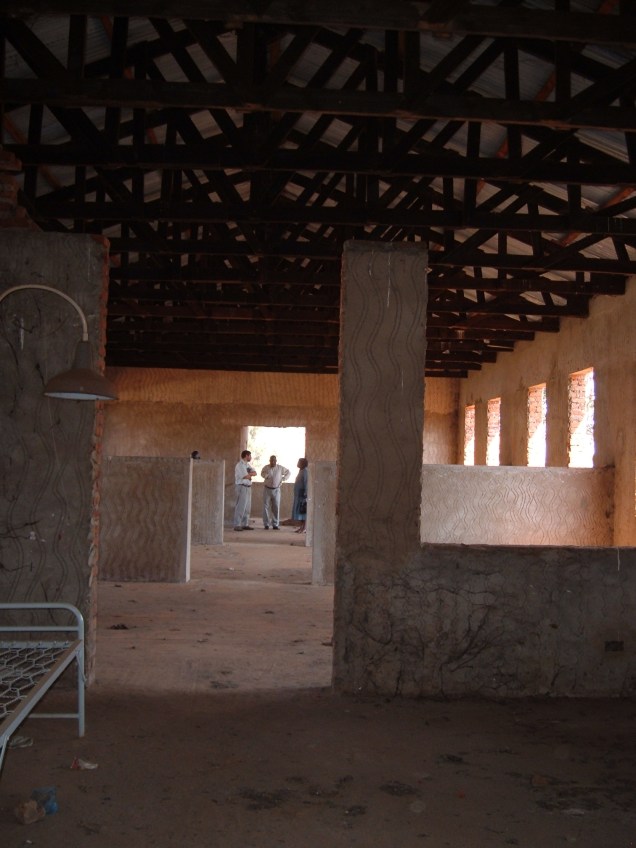
The hospital director greeted us warmly and led us to the wing that held the new pediatric ward, as yet unoccupied. There, he introduced us to the head of the pediatric department. They both beamed with pride. The cement floors were completed, the walls were up. The wooden roof was still open, and cabling had begun for electricity. 
2007_0615malawi0006

The new pediatric wing under construction

Rudi, our project director in Lilongwe, told them that we would have more funding for the pediatric wing. They gasped with delight and hugged all of us.

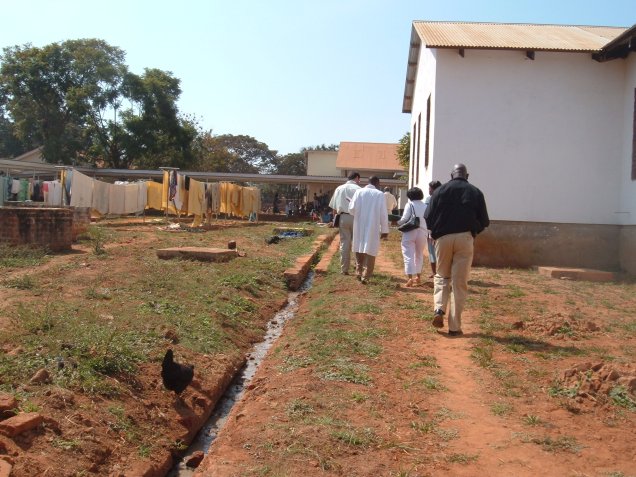
From there, we returned to the main hospital building. At the entrance to the existing pediatric ward, we stepped over children sleeping in the hallways. The children’s ward had seven beds, but they were empty. Forty or fifty children sat on cement floors, outdoors, where there was no roof. An open sewer for gray water ran along the walls to its terminus, also open, around 50 feet from the building. The terminus had been recently upgraded.

Where the cement floors ended, the courtyards began. Here, there were families camped out, cooking, washing laundry in plastic tubs. In addition to the people, there were chickens running around and a few goats grazing.
2007_0615malawi0010

The chicken on the left joined part of our tour.

“The families live on the grounds of the hospital however long they need to,” the director said. “There is not enough staff to care for the kids overnight, so their mothers take care of them.”

As we returned to our car out front, oxen were parked in the driveway, calmly waiting their owner’s return. We thanked the staff, waved goodbye, and drove around the oxen.


That weekend, I took a trip to Liwonde National Park. The employees in my office urged me to take a private car, but I insisted on the bus. The local buses were equivalent to a Volkswagen minivan, but with moving seats and twenty-five people shoved inside. The ride took four hours with people constantly climbing on and off, and rearranging people and their packages to fill it all. A woman boarded holding a baby on her hip and a guinea fowl by its wings. As she got settled, she would hand the bird to different people. At one point, she ended up sitting next to me. I gave her a look that said don’t even think about handing me that thing and it worked.

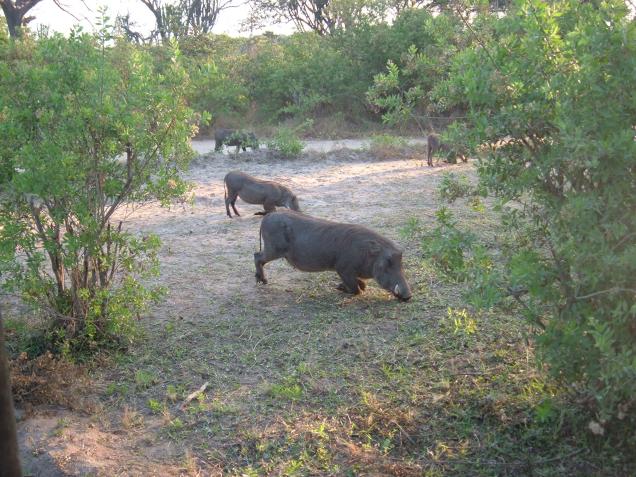
Liwonde National Park for me was like finding a new religion, so I was ebullient when I boarded the bus at the end of the weekend to return to the city. On the boat into the heart of the park, I had seen hippos and elephants. My cabin at Mvuu Lodge opened to a lagoon and a crocodile floated by my terrace. Hiking, I had spotted warthogs eating while on their knees (they’re my favorites), monkeys with bubble-gum-blue balls, baboons, impalas, kudu, sables, waterbuck, and zebras. From the dining room, we watched herons, storks, and rainbow birds in flight.
2007_0615malawi0090

The underappreciated warthog

On the bus ride back to Lilongwe, I sat next to a different type of passenger. He was a man in his twenties, holding a boy of maybe five, slumped against his shoulder.

“What is wrong with him?” I asked, before sitting next to him. I was worried that he might be contagious.

“Malaria,” the father said. “I am on my way home from the hospital.”

The boy was lethargic and barely responsive. I watched him drift in and out of sleep. I wondered what they did for them at the hospital, how long he’d waited, and how much money it had cost him. I pictured the hospital I had just visited, my first, the scene I will never forget. The kids and mothers in labor on the cement floor, the families hanging their laundry on lines. I hoped they had medicine where the father took his son. I hoped they’d hydrated him. It did not look it. If they did, I hoped the needle was sterile.

At a stop, the father got up. There was a small stand selling bottled drinks, American brands. I handed him the kwachas I had, probably five or six dollars’ worth.

“Orange juice, not coke, ok?” I looked the man straight in his face. As he carried the limp boy off the bus, I was still pleading, “orange juice!”

Everyone on the bus thanked me and called me “sister” for the rest of the ride. As people got on and off, they made sure there was room for my bum on the rickety seats. They stood to help me and my bags off the bus when it was my turn to exit and we waved goodbye.

Dear Reader, if you have not taken a safari, you should take one in your lifetime. If you have not toured a health facility like the ones that the vast majority of the planet has access to, you should. Finally, when you travel, always talk to people, listen to them, engage. Tell them stories about your life. Bring photos of your family and show them to people. Ask lots of questions. People love to share and to learn about you.


Stupidity in Mexico City

Even an experienced traveler does stupid sh!t. To stay out of potentially problematic situations, it is best to remember this, no matter how experienced you are.

In a job years ago, I used to visit Mexico City on a regular basis. I considered myself an experienced traveler, by then having visited two dozen countries in Europe and Asia.

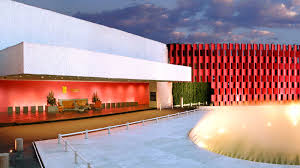
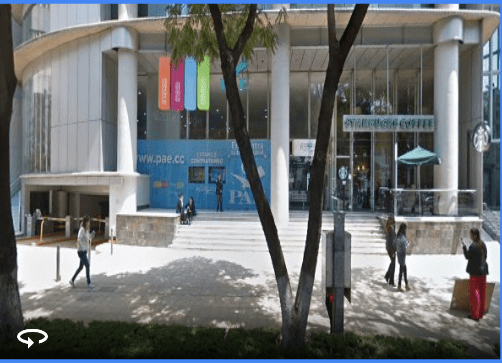
Screen Shot 2019-05-31 at 12.09.03 PMMy office building in Mexico City (This came up in a Google images search) The Starbucks is new!
I worked for a technology company and their travel support was good. A pre-arranged driver would pick us up from the airport and deposit us at the hotel. For rides around the city, we often had drivers or Mexican colleagues take us. At my U.S. home office, we had a security company who delivered presentations on security in general and advised us on specific destinations as well.

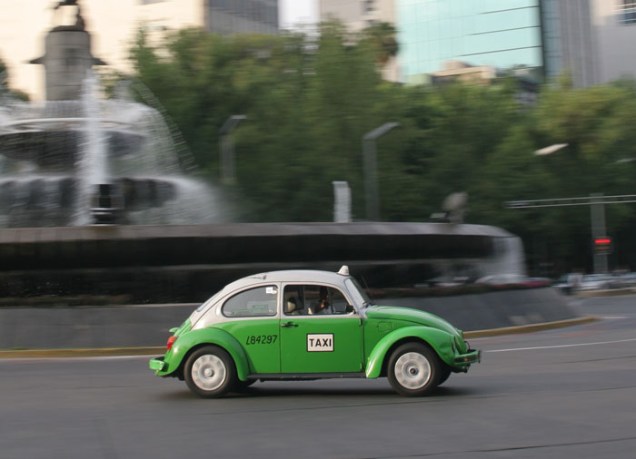
The instructions for Mexico City included this clear instruction: do NOT hail a taxi. At the time, green Volkswagen beetle taxis were as common as houseflies, but there were also boxy yellow ones everywhere.

SHEA-Vocho_6423Photo credit: Terry Shea

I read here that the city eliminated the green beetles in 2012. Absent 65,000 or so green taxis, I imagine the city landscape has changed.

Once again, NO taxi hailing: green, yellow, or otherwise. If we needed a ride from the hotel to the office, we were to get a taxi only from the taxi line at the Camino Real Hotel where we stayed. If we needed a taxi from the office back to the hotel, the office called one for us.

camino realCamino Real Polanco – it’s very cool – I recommend it!

I still did something stupid. As instructed, I got my taxi in the morning from the hotel line. I was going to the airport directly from the office, so I was all packed with my roller suitcase and my black laptop case ready to explode at the seams. I was dressed in a business suit, a silk blouse, and heels. It was warm outside for a suit jacket, but the office was always overly air-conditioned.

For some reason, the taxi driver was confused. My office was on Insurgentes Sur, the main avenue in Mexico City, nearly 18 miles long. Other than the traffic congestion, this was not difficult. The buildings are numbered, in numeric order. As one would expect.

Insurgentes Sur is also lined with tall, glass, office buildings, such as mine in the photo above. My driver was frustrated. He pulled over and barked at me that we were here and I should get out. Then he peeled away from the curb and I looked around. I was not standing in front of my office building; that was a good 15-20 minute walk north.

I was furious, and mad at myself for paying him. This was probably good because I was a bit scared too. On the sidewalk, I stuck out like a beaming white girl in a pale pink suit and black patent pumps. I was starting to sweat in my silk blouse, but did not remove my suit jacket, as I did not want more crap in my hands. Dragging my roller bag, I marched up the avenue, fast and with purpose, muttering and cursing — not under my breath, but loudly. I was pissed off, but also hoping that anyone considering messing with me would think I was crazy. Several people looked at me (for any number of reasons). I gave them the stink eye and they turned away. I don’t know if my behavior helped to thwart any danger, as none befell me, but it’s an idea to try.

While I am on the topic of Mexico City, it is an incredible city that I highly recommend. There is plenty to do there, but here are 3 quick tips to consider:

  • Order Queso Fundido at the Camino Real (or elsewhere).
  • There is a lot of a amazing food to be found – try dining in a restaurant in an historic building.
  • A day trip to the ruins at Teotihuacan –  it’s an amazing site/sight.

Main takeway: make sure you know where you are when your taxi driver drops you!


NYC Subway Mosaics

The New York City subway system is home to some incredible art. The price of admissions is a subway ride ($2.75 with Metro Card).

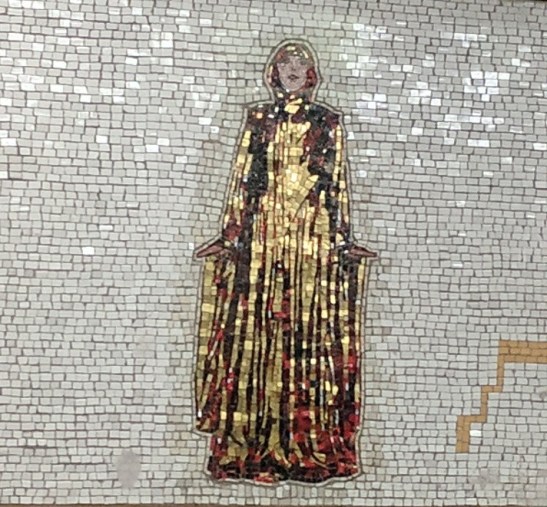
I am particularly enamored with the mosaics. Last weekend I was on the 1 train and happened upon this beauty at 66th Street!

IMG_20190520_142613

The NYC subway opened in 1904. Much of the amazing tile work is from then, but mosaics and other treasures have been added throughout the decades. This one looks old, but according to the MTA website, this golden lady is from 2001. It’s the Lincoln Center stop, adorned with Artemis, Acrobats, Divas, and Dancers over 22 panels.

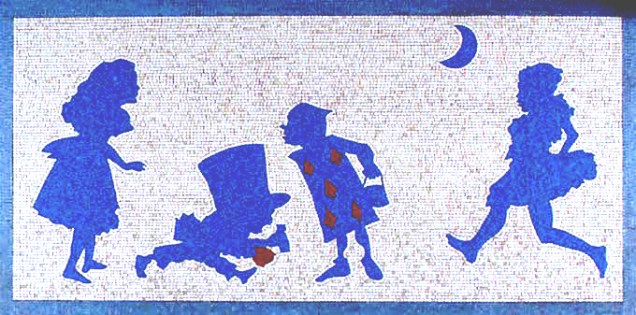
Also on the 1 train, 50th Street Station offers new-ish (1994) Alice in Wonderland-themed mosaics:

Alice 2

Photo credit: MTA

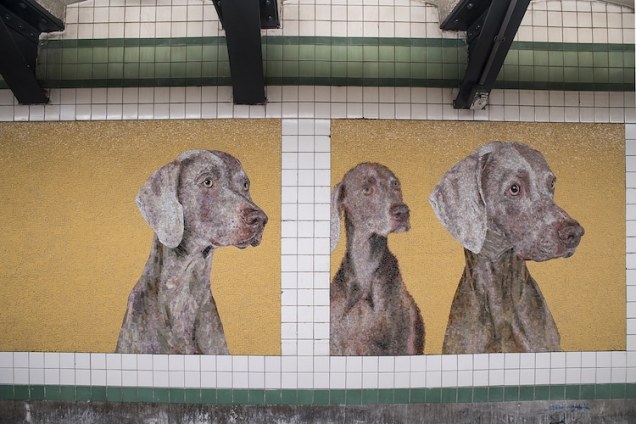
The 23rd Street Station has a lot to love. Here is a story about the 120 floating hats (from 2002) at the N/Q/R lines there. Also new (2018) are William Wegman’s Weimaranar mosaics. His dogs Flo and Topper can be found in 23rd Street at the F and M lines.

william-wegman-stationary-figures-1

Stationary Figures (2018) © William Wegman, NYC Transit 23 St station. Commissioned by MTA Arts & Design. Photo: mymodernmet.com

If you’re interested in visiting more of the NYC subway system’s mosaics, there are MANY more. Here is a list by curbed of their twenty picks, some old, some new. The MTA has an official site with art information on every stop.


Rijsttafel (Rice Table)

800px-Rijsttafel_Den_Haag_Javastraat

Photo credit: Wikipedia

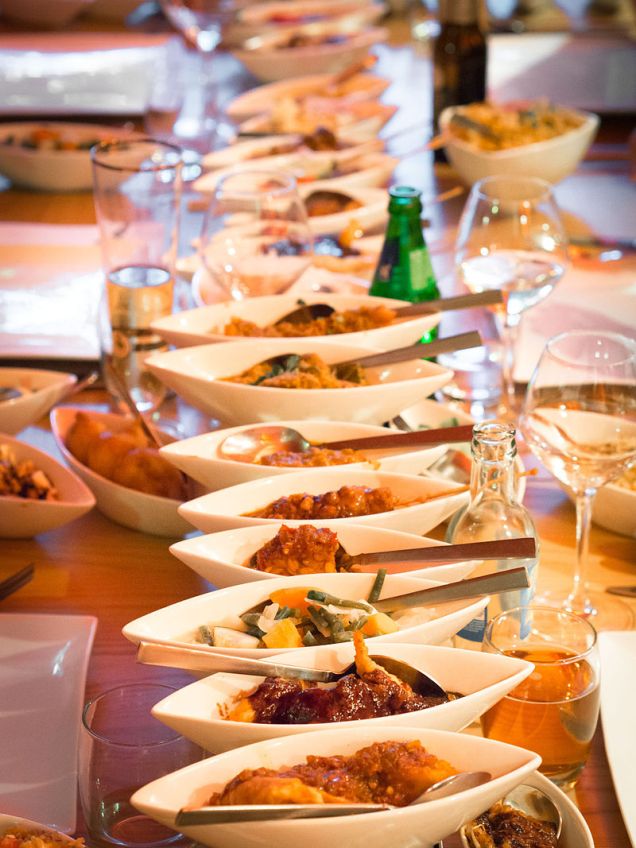
The Indonesian rijsttafel — a Dutch word that translates into English as “rice table” — is an elaborate meal adapted by the Dutch following their colonization of Indonesia. The politics of European imperialism aside, rijsttafel is a concept you’ll find in Amsterdam, not Indonesia. It is a fusion cuisine offering a variety of small dishes with spices and flavors that I have not experienced elsewhere on one table. It’s also darn difficult to find in other large cities that normally have all you could want on offer.

Here is the pronunciation of rijsttafel in phonetics: /ˈɹaɪsˌtɑːfəl/. Did that help? Ha ha. I listened to several audio versions of it online and they were all different. In one case the initial r was very notably rolled, but not the others. The j is pretty hard, making the first syllable sound like “ridge” or a slightly softer version of it. The “a” sounded different in every version I listened to, so I will leave you to your imagination with the rest.

I first had rijsttafel (“rrizh-stahffl”) two decades ago in Amsterdam while on a business trip. I was staying in a charming little hotel on lovely Vondelpark and my Dutch colleague took me to Kantjil for dinner. Wonderfully, Kantjil still exists! It does not have the highest ratings of the rijstaffel places on Yelp, but I would give it a chance.

It was an experience that stuck. Rijjsttafel was my primary objective when I returned to Amsterdam 15 years later.  Our hotel was not in the city center, so we decided to try the highly rated Blauw. Blauw also happens to be the restaurant featured in the Wikipedia listing for rijsttafel (photo above).

Again, the meal was memorable. I will also mention that my dining partner is a chef, so he tends to be hyper-critical of restaurants. He LOVED everything about it. He stopped talking, starting eating, and sopped up every last drop. The service was wonderful. They kept the food coming. The menu has English translations on it, which is always helpful, especially when you are experiencing a new type of cuisine.

The menu is long here. Go straight to the rijsttafel page. There is both a vegetarian and vegan option. Here are a few of the selections: tofu omelette, pan-friend eggplant, fried banana, sweet and sour cucumber. My companion had the egg in coconut sauce and said it was delicious.

As stuffed as we both felt at the end of dinner, of course we got two desserts to share, one chocolate and one not. Important warning: I see durian on the current menu. DEFINITELY skip that! If you are not already a durian fan — and I have never met one — it will seriously ruin your night, if not your entire vacation. Not kidding.

No durian sign

By the way, this is a “No Durian” sign. I have seen these in hotels in Asia. Sometimes the signs also specify the amount of the fine if you choose to disregard their prohibition. That’s because it will smell like something mammal in origin and MUCH larger than a durian died in your hotel room. You may be an adventurous eater, but you have been warned.


On the Cheap (and my comments on Money Mag’s annual list)

You can have the richest experiences by going on the cheap. Actually, I pretty much guarantee it.

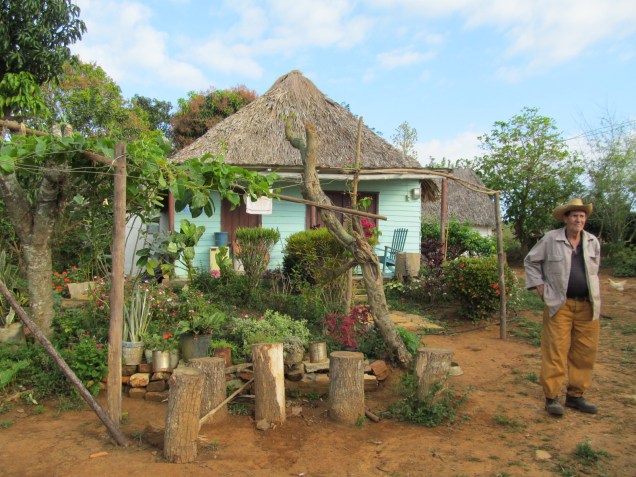
Case in point. l LOVED Cuba.

IMG_0991

In addition to it making my list of top 5 places that I would go back to, everyone else I know who has been there has loved it too. That includes my parents who went 10 years ago; my friend who went 20 years ago; and my art teacher who moved there recently, started an art and tourism business, met a Cuban man, and had a baby all in one year! Last month, my aunt and uncle went and did not like it at all. Wha??! They took a cruise. I have written about cruises already. The ship stopped in three principal cities and a guide told them that the government embeds spies in the neighborhoods who watch everyone. And THAT is what they remembered. I told them I was in cities, villages, and on farms and met dozens of Cubans. I spoke to them in Spanish and we had a few English-speaking (Cuban) tour guides. Not one of them mentioned a plague of neighborhood spies. What did we talk about? The politics of Cuba, the political positions of the U.S., racism in Cuba, Russia, Venezuela, art, health, sports, food, music,… You get the idea. I loved it. You can draw your own conclusions, but if you are considering going, just DO. I should apologize though, as the theme of this post is “on the cheap” and it is not easy to go there cheaply. To do that, you will need to go on your own (not on a tour). This process is too detailed to write about here and the U.S. government regulations change fast, so research this thoroughly before attempting it.

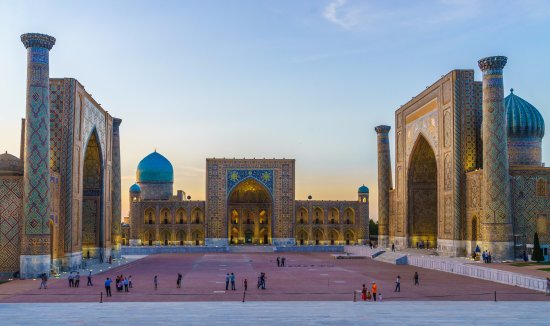
Money Magazine publishes a great list of 20 affordable spots you can check out. I will comment on some of their choices. Of course, there are many more than 20 wonderful affordable spots. If you do a little research on, say, Central Asia, you will find spectacular sites with relatively few tourists. Here is one such example:

registan-square-samarkandSamarkand (photo credit: TripAdvisor)
On to Money Magazine’s list… I am going to skip their U.S. destinations, as it’s not my expertise. Here are my selected comments on their international destinations:

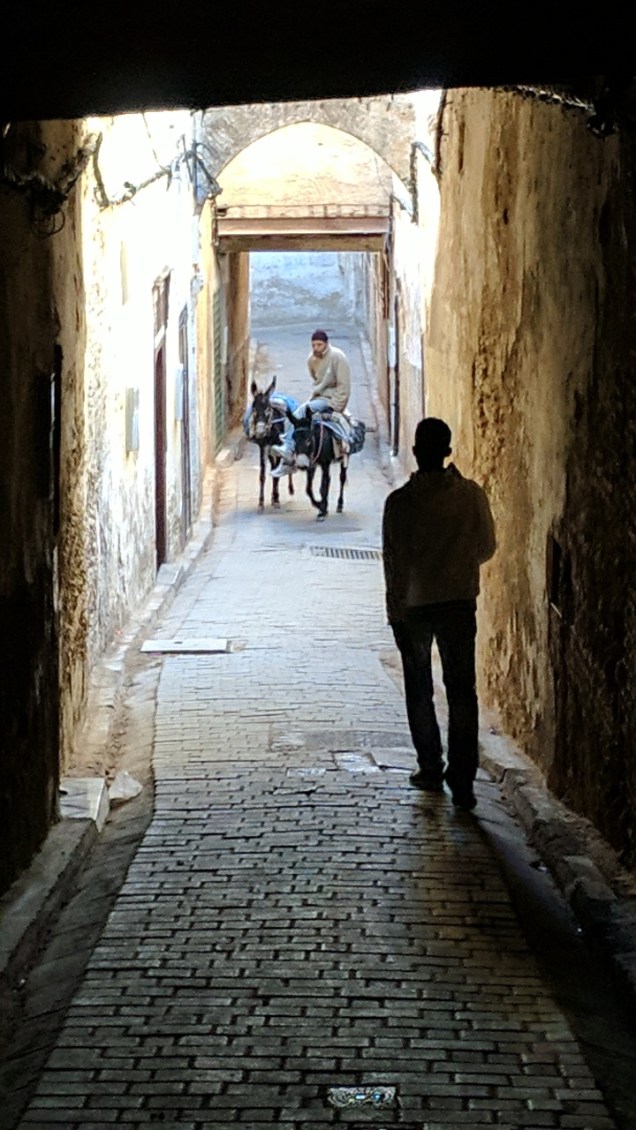
  1. Meknes, Morocco – My group of four did not love it. However, another friend did. Go figure. Nearby Roman ruins of Volubilus are totally worth a visit. Fez, with the largest medina in the world, is fascinating. I call Fez a MUST do, though overwhelming.
  2. Cozumel – I dunno. I’ve been to Cancun, Tulum, and Playa del Carmen, but not Cozumel, so I’ll pass on this one.
  3. Havana – see the first half of this post.
  4. Montreal – not sure why it’s on this list. Your call.
  5. Nanjing, China – I’ve been to Beijing and Xian and they blew my mind in a good way. I’ve mentioned that Shanghai is on my places to go next list, but mostly because I have a friend who is moving there, so maybe I’ll put this one on my list with it. See #10 below. However, the photos of Nanjing look promising.
  6. Monteverde, Costa Rica – I would recommend just about anywhere in Costa Rica. One of my top 5 of all time.
  7. Medellin, Colombia – never been.
  8. Crete, Greece – I’ll give this one a mildly interesting. The weather was not great when we were there, so we did not go to the beaches. However, would not have changed my reaction to the ruins at Knossos. Just ok.
  9. Prague – As I have such a deep love for Prague, I find this one difficult to talk about. From an architecture perspective, there is no place like it. However, it is overrun with tourists at all times of the year.
  10. Tainan, Taiwan – I have not been there. However, Hong Kong’s night markets and Bangkok’s flower markets get at least two thumbs up. One therefore might assume that Tainan’s night flower market is a wonderful cultural immersion experience. But I have a no-assumptions rule. The photos I looked at online appear carnival-kitschy rather than authentic, so proceed at your own risk. And please comment below if you have been!

Some More Favorite Photos

IMG_20171205_103801


24296324_10155065335916787_3230242754900613374_n


IMG_2465

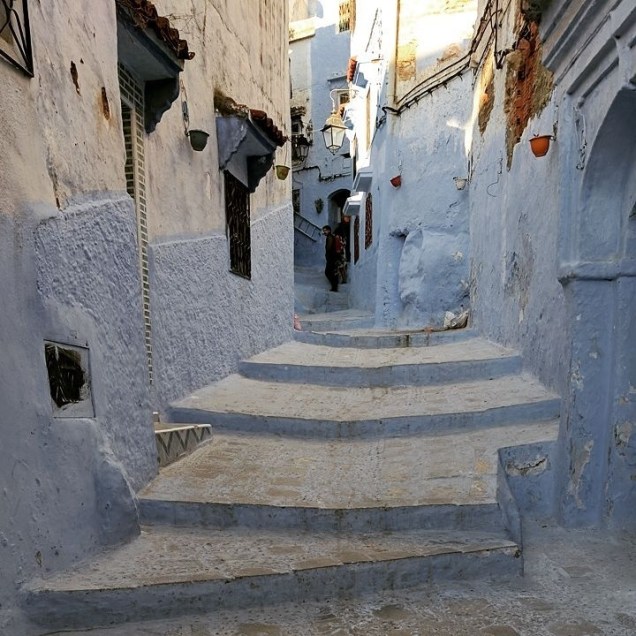
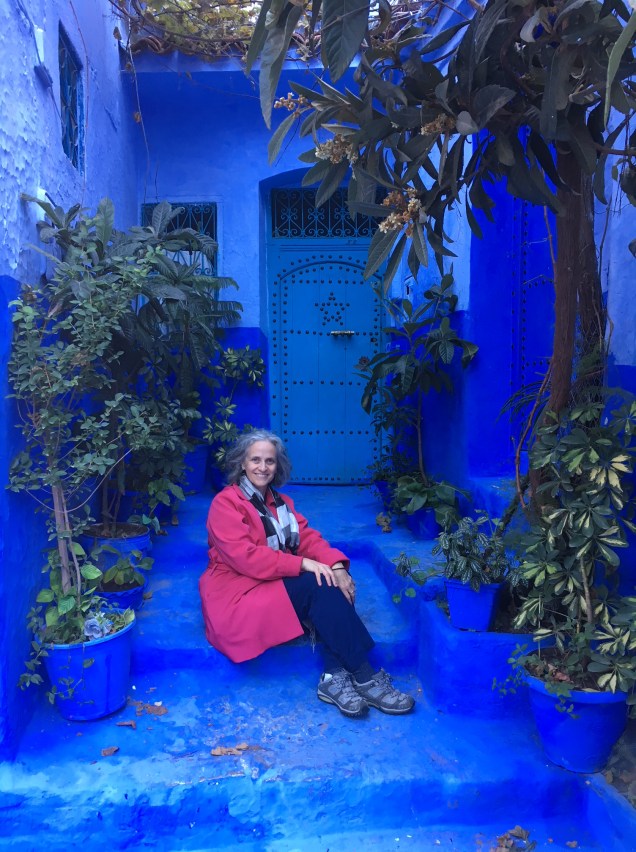
These three are in Chefchaouen, Morocco — it’s impossible to take a bad picture there!


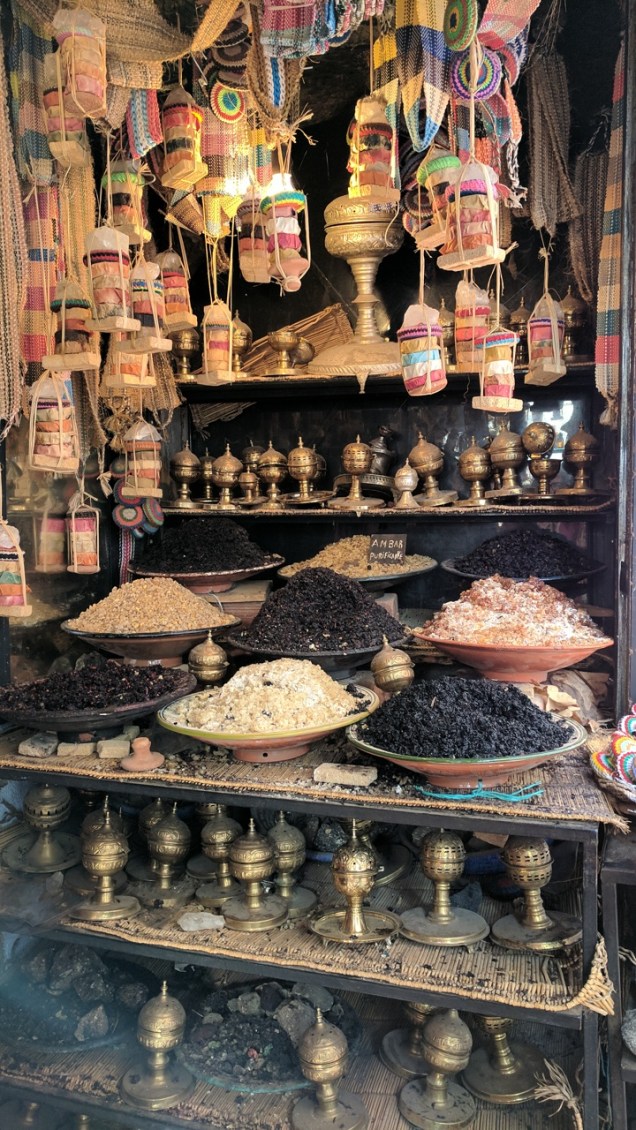
IMG_20171207_101305Fez, Morocco

This one was totally spontaneous. My cousin, Tammy, tapped my shoulder and said, “get that!”


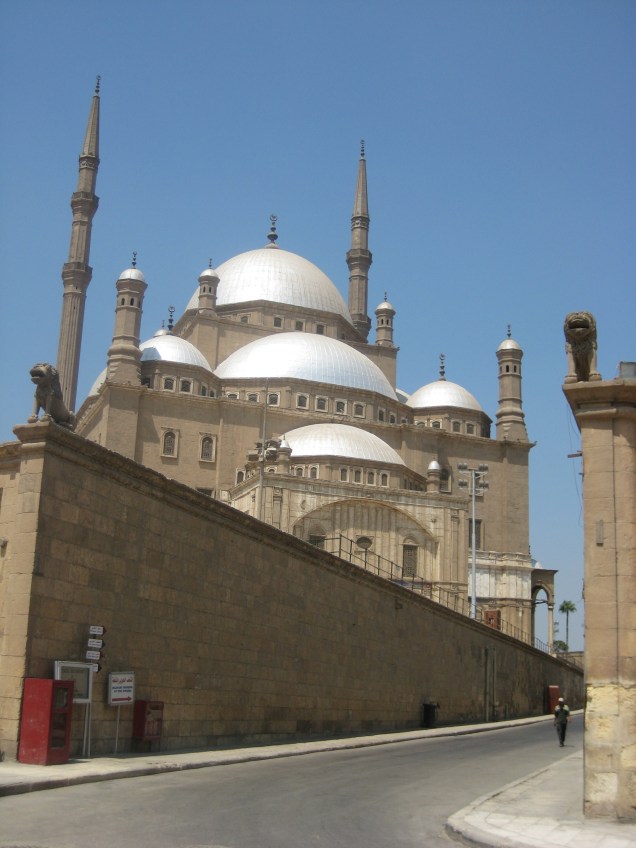
egyptPedestrian passes a mosque in Egypt. That blue sky is NOT Photoshopped.
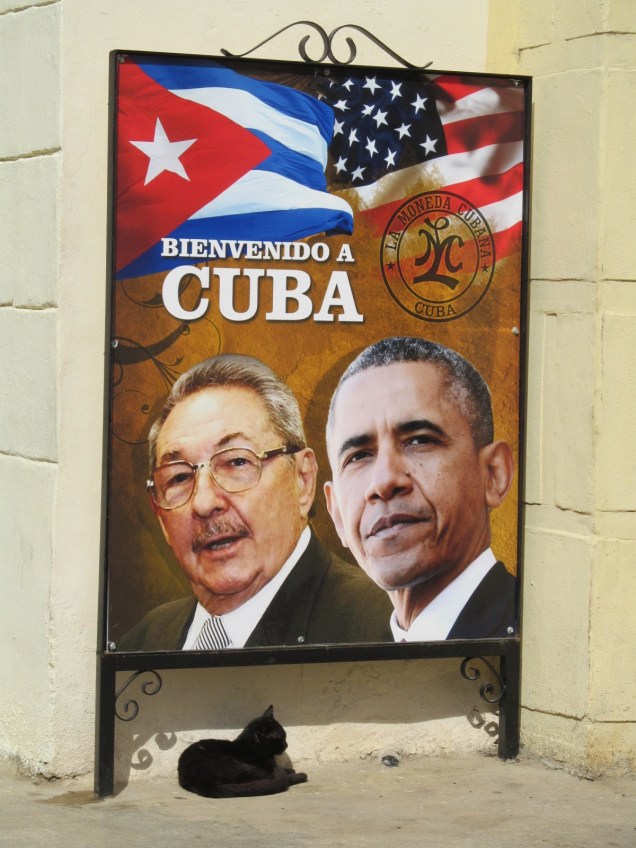


IMG_1135 flag peace topOld Havana, Cuba

Unbelievably, my friend Laurie and I were there at the same time as President Obama! The Cuban people were so psyched about his visit and so hopeful about their future relationship with the U.S. We were all so optimistic. Now this just makes me sad.


IMG_20160225_171014467_HDR

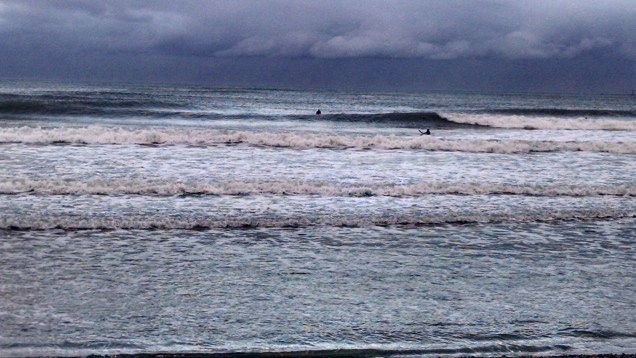
Bonus photo: a beach in New England, close to my home. Sometimes you don’t need to go far.

Barcelona

IMG_20171201_080901This is one of those recommendations I do not want to make publicly, as I don’t want to not be able to get in next time I go to Barcelona. It’s a farm-to-table restaurant in the Barceloneta neighborhood. Barceloneta is not on the short list of touristed neighborhoods. But should you choose to go, and please do not tell all your friends, it’s Somorrostro. It’s also a family-run shop and they are super-nice. Shhhhh!

Look Closer

The Blue Marble

The Blue Marble

One of the things that appeals to me about travel is that you board a metal cylinder and pop out the other end in a different world from the one you left. When I was early in my travel experiences, I found that as I traveled more, I craved even more different worlds from my own on the other end.

Growing up in the United States, my journey began with dips over the northern border (to Niagara Falls) and the southern border (Tijuana, when it still considered pretty safe). I moved to Eastern Europe for work when I was in my upper twenties. At the time, I had a two handfuls of countries under my belt. I was determined to see as much of the region as I could while I was there. After two years, I moved back home and  took a job in Boston that offered opportunities to travel to Western European countries. It was not enough and after two years I took a job where I supported a small set of Latin American countries. Five years later, I went looking for a position that offered the possibility of travel to Africa. I traveled to a dozen countries in Africa over my seven years there. Then I left that organization for a gig that put me in Dhaka, Bangladesh.

4-2B057

Christmastime in Dhaka. It’s freezing by the way.

Let’s stop there. One lesson that I learned during these years is that new destinations continued to stump me and cause wonder. I arrived in Mozambique expecting its neighbor Tanzania. It was not. I arrived in Costa Rica expecting Belize or Panama. It was neither. It was time to stop assuming stuff and just open my eyes and watch. One thing I’ve learned over thirty years of travel is that my journey is still a work in progress.

And then something else happened. It wasn’t a different world I was finding; it was the same. I leaned in and looked closer. People, families, meals together, a grown daughter’s wedding, a college graduation, holiday festivals, funerals. It was the same world, but it was wondrous for me and life to them.

Recently, I listened to a podcast interview of the first Iranian woman in space. I don’t think I had ever heard an astronaut speak so beautifully about the experience. When viewed from space, Earth has no nations and no borders and no tribes. We live on an orb of greens and browns and blues and whites. Boundaries are built by humans. And humans should tear them down.


Santa Fe

IMG_20170617_110035_704

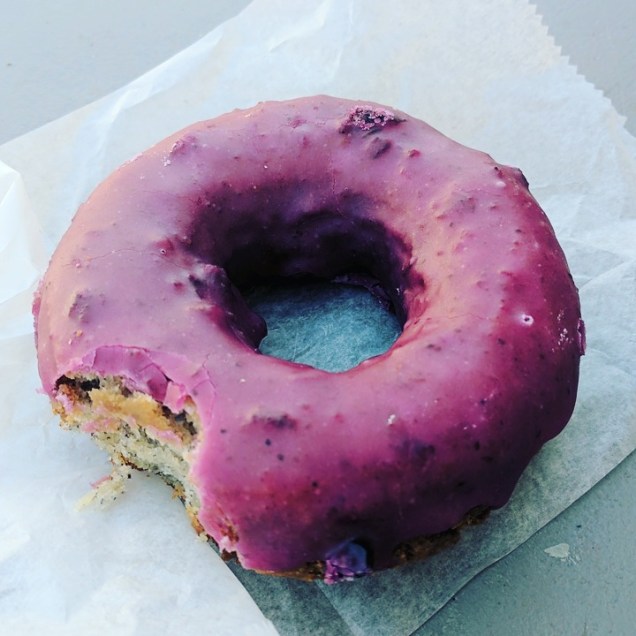
Blueberry Lavender Corn Doughnut at the Santa Fe Farmers’ Market

Santa Fe, NM is a great food town. I had some great meals there at the restaurants and cafes. They also have a great farmers’ market on weekends and an accompanying craft market. I have not stopped thinking about this donut. They sell out early and there was a line the whole time I was there. I really wish these people shipped around the country.

The people were also really friendly, and I am not used to that as I’m a Boston gal 🙂  I would go back to Santa Fe in general and for the food specifically. Love.

Paris

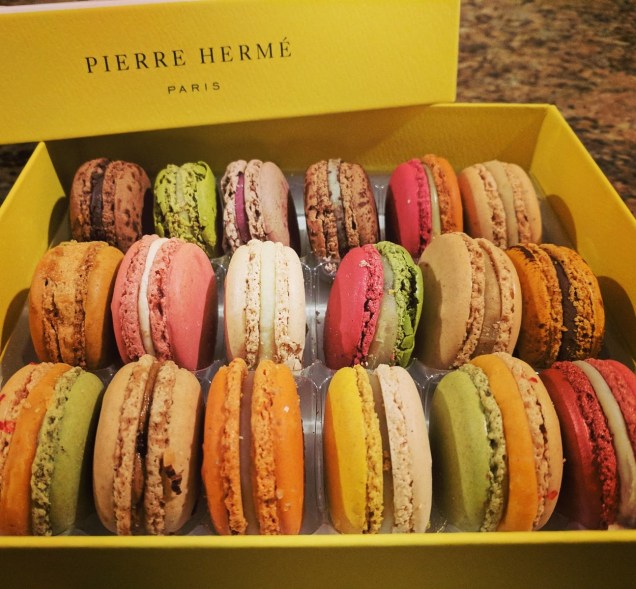
IMG_20180912_212328_539Macarons

Good ones abound, but Pierre Hermes is my ultimate.

They cannot make a good macaron in the U.S.

U.S. style (everything): sugar. This applies to Ladurée in Manhattan as well (who makes a perfectly respectable macaron in Paris). After biting into each of the three I bought, disappointment growing each time, I actually threw away the box of remains. This is not something I would ever do lightly.

French style: distinct flavors that make mini explosions of joy in your mouth. My friend brought me this box on the plane from France, so I had the opportunity to test them again at home in Boston. Yup, still spectacular bundles of wonder.