Travel and Writing in the Age of COVID-19

*This post was originally published on the Writers Abroad blog.

For many years, travel has been a source of inspiration for my writing. What started as personal travel journaling shortly after college, turned to group email updates to family and friends at home through the years I worked in Africa, turned to an interest in creative writing. I started writing classes in 2017. In 2019, I launched this blog. Late that year, for my first National Novel Writing Month (Nanowrimo), I produced a very rough draft of a novel based on my two years living in Prague. I dreamed of traveling to Prague to do research for the book.
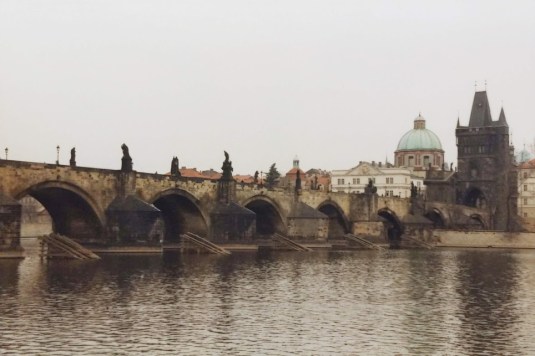
charles bridge by todd hirshPhoto by my brother, Todd Hirsh

The COVID-19 pandemic curtailed my travels and most everyone else’s in early 2020. My international writing group, Writers Abroad, was considering possible destinations to meet for the group’s ten year anniversary.

In mid-January, I flew to Lusaka, Zambia for work. When I arrived at the airport for my return flight on January 31, things had changed. The airport employees wore masks, as did many of the passengers. It was an eerie signal of what would come. The world watched the epicenter of the pandemic move from Asia to Europe. I postponed a work trip to Laos, concerned that, even if I found a flight pattern, I might not be able to get back to the U.S., where I live. The epicenter of the pandemic moved to the United States.

I haven’t found much motivation to write since returning from Zambia. I haven’t even written a blog post about the trip (which was fabulous). My photo at the top is the lovely Sarovar Hotel in Lusaka. I’ll have to rectify the absent blog post situation soon.
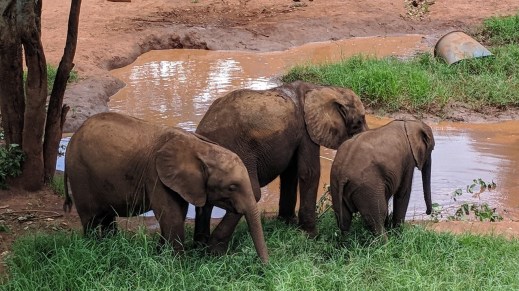
elephantsBaby Elephants at the Lilayi Elephant Nursery, Zambia

From what I’m reading online, a lot of writers – including some members of my group, Writers Abroad – and other creatives are feeling the same way. However, a minority (it seems) of writers are finding themselves more prolific, which is wonderful.

For people who’ve had their travel plans cancelled or are missing their usual forms of inspiration, what to do? First, know that you’re in good company. In addition, here are some ideas that you might find a source of enjoyment:

  • “Retravel” by looking through old photo albums – even better, by organizing and scanning old travel photos from before your photography went digital.
  • Call a friend who you traveled with and share the memories.
  • Draft a flash story/essay about a favorite travel memory. Flashes are under 1000 words, but often are much shorter. There is a destination-based 100-word flash series that started in Santiago, Chile and expanded to other places such as Medellin, Bogota, and Boston. The flash pieces are written by someone who lives there and are in the native language. Maybe you’ll be inspired to start one in your city!
  • Watch travel shows, such as Anthony Bourdain’s No Reservations or Parts Unknown, on Netflix or another streaming service. If you’re interested in a specific destination, search it online and see what videos you can find of the place.
  • Revisit your “bucket list”. Compile a list of places to go when restrictions ease and you feel comfortable traveling again. These might include visits to family, day trips, or places within driving distance of your home.
  • Try a new creative hobby. Rick Steves – whose name is synonymous with travel – told the New York Times that he’d never cooked a thing in his life before the pandemic. Now he’s taking short hikes around his home and cooking.

What new activity have you tried since the quarantine started? Perhaps you’ve picked up an old hobby you hadn’t done in years. Where will your first trip be? I’d love to hear from you in the comments!
London: where to visit that’s not Big Ben or Westminster

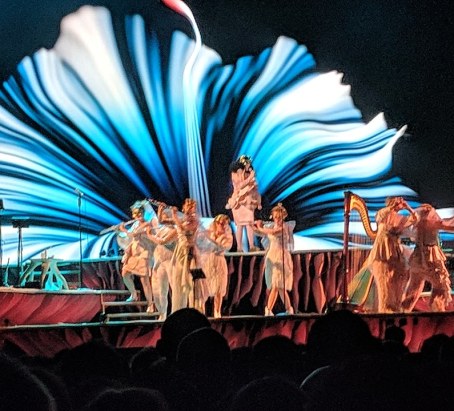
IMG_20191122_021252_794Bjork in concert at the O2 (love!)

For some reason, I took the same trip to London three times before deciding to see something new. You won’t be reading here about Big Ben, Westminster Abbey, or the changing of the guard at Buckingham Palace. You definitely won’t be reading about Stonehenge, which is on my list of Why?

On my recent visit to London, I stayed with a friend on the South West side, so my list is designed for convenience of travel from there. I was by the Raynes Park train station, near Wimbledon, and the destinations listed below took 45 minutes to one hour to reach. London is a big city, so be prepared for long travel times. Trains, tube lines, and buses provide outstanding coverage.

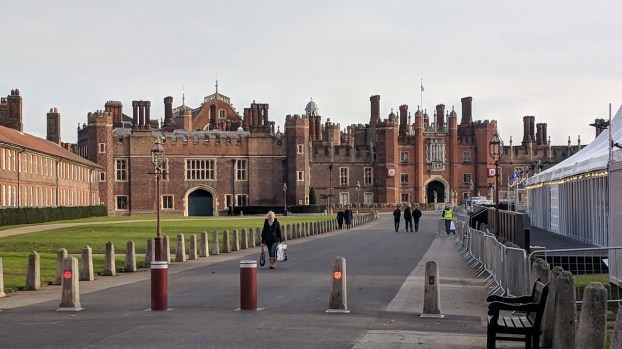
1. Hampton Court (5 stars)

IMG_20191120_132106

Built in the 1500s, this was the palace of Henry VIII. It’s remarkably well-preserved and dripping with history. The optional audio tour will refresh your history of Henry’s six wives and his break with the Catholic Church. Tour the medieval dining hall and the royal chapel. A series of kitchen rooms offers a rare look into food preparation of the day and excess of consumption. I spent three hours in Henry’s part of the palace and didn’t even make it to the newer, baroque side, and walked through just the part of the gardens open in winter.

2. Tate Modern (5 stars)

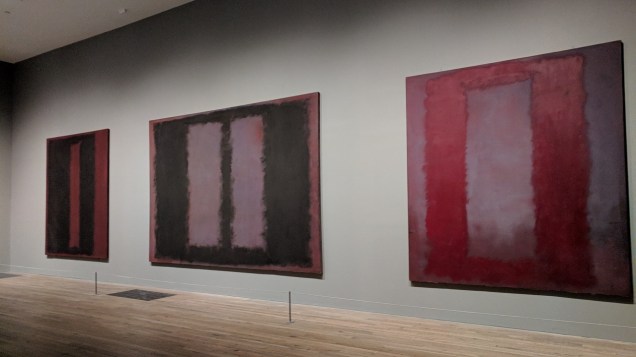
IMG_20191121_160351Some of Mark Rothko’s murals, designed for the Four Seasons in NYC

They have a top notch permanent collection – Rothko, Pollack, Krasner, Picasso, Degas’ Little Dancer, Kandinsky, Matisse – and fascinating rotating exhibits. Free admission(!) to the main collections and some of the exhibits. When I was there, exhibits included Olafur Eliasson‘s innovative projects, like his heartbreaking glacier melt series, Ed Ruscha, Helen Frankenthaler, and a Kara Walker fountain.

3. The Play That Goes Wrong/West End (4 stars)

IMG_20191121_191650

Clever comedy about, you guessed it, the production of a play where everything goes wrong.

4. Food (5 stars)

Food is important to me. I was very happy in London. Wagamama and Pret a Manger are two excellent chains with headquarters in London. Find food from just about every part of the world there. I had delicious dim sum one day. I passed a Basque restaurant in the West End. I didn’t try it, but Basque is one of my favorite regions for eating. There were vegan options everywhere, even at fast food chains and in train stations, like the parsnip and kale soup I enjoyed at Waterloo station. I found easy access to fresh juices and plant-based milks for my coffee.

5. Victoria and Albert Museum (5 stars)

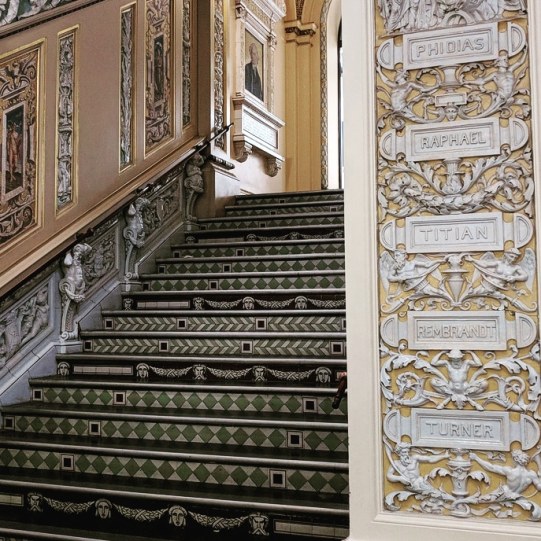
IMG_20191123_142007_834Ceramic staircase

The V&A is an expansive decorative arts museum. Wander the European rooms, Asian rooms, and others to find collections of silver, ceramics, furniture, clothing, musical instruments, sculpture, etc. etc. The Victorian cast courts housing reproductions of famous sculptures throughout the world were fascinating. There is a large Chihuly glass sculpture suspended over one of the lobbies. I spent a bit too much time in their interesting gift shop.

The sites that follow, I missed. They are on my list for next time I’m in London:

6. Dennis Severs’ house

The house was home to a Hugenot silk weaving family.  Ten rooms are set up representing different eras between 1724-1912. These tours sell out, so book in advance.

7. Brick Lane

This is a funky, hip neighborhood that can be explored any time, but I’d like to coordinate my visit with their Sunday market.

8. Historic literary district of Bloomsbury

There was not enough time in my 5-day stay there!


Experiences Over Things: a list

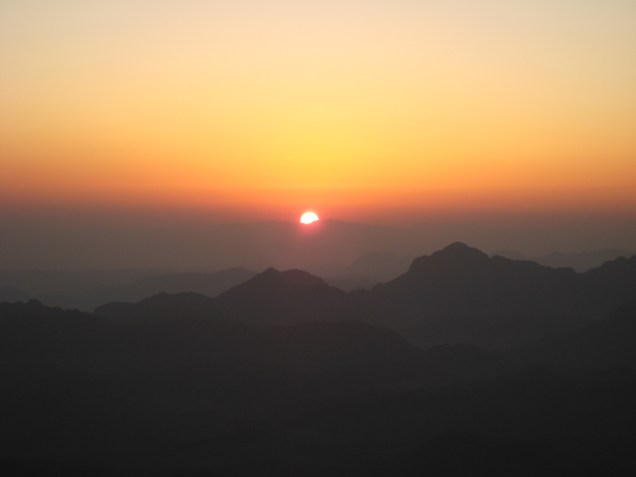
sunrise over sinaiSunrise over Mount Sinai

I’ve written a number of posts about what to bring home, but I haven’t given just due to experiences. Trends, of course, change and the millennial generation’s preferences for experiences over things is getting wide attention in the press.

For this post, I sifted through my own travel memories throughout the decades to prepare a short list of knock-your-socks-off types of experiences. Call it a “Things to Do Before You Die” list, rather than a “Places to Go Before You Die” one. There are many such lists on the interwebs, and I would dispute much of what’s there. (Case in point: you can skip the pyramids at Giza, Egypt and the rock carvings at Petra, Jordan, and still be fine IMO, but many people disagree with me.) Some of the experiences that made my list were dependent on the destination (for example, hiking Mount Sinai at dawn, which I’ll recount later in this post) and others can be created in a variety of places.

In the first example on the list, it was the combination of place+experience that puts it on knocked-my-socks-off list:

1. The Great Wall of China

I was underwhelmed by my first visit to the Great Wall. It was a busy tourist stop. There were super-sized tour buses. There were stalls selling various trinkets, such as “gold”-plated moulds of the wall. It was difficult to get a photo without tourists in it. I snapped a few and left.

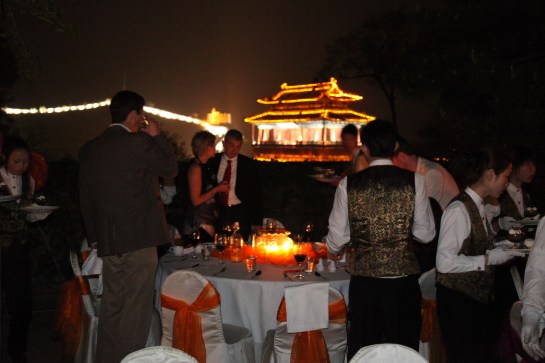
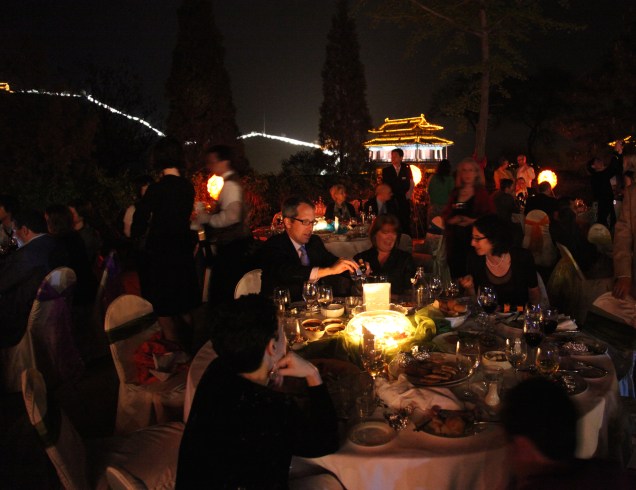
Later in the trip, my family held a double bat mitzvah reception on an area of the Wall reserved for private events. This experience deserves its own blog post, but in short… The evening began with an elegant cocktail hour on the Wall with traditional drummers and dancers. Then we were seated at round tables in a formal setup in an adjacent section of the Wall. Our tables were surrounded by lush flower arrangements and beautiful decorations. We were served a delicious multi-course Chinese meal with red, white, and sparkling wine. A mix of music played and people got up to dance. We watched the sunset from our tables or from the dance floor. Sometime after dark, some secret guy behind a switchboard lit up the Wall section by section. At the end of the party, as the guests made their way back to the chartered buses, the skies opened up. It poured and lightning bolts lit up the wall in flashes. It was the most suitably dramatic end to the night.

1188-IMG_1183

2. Paris

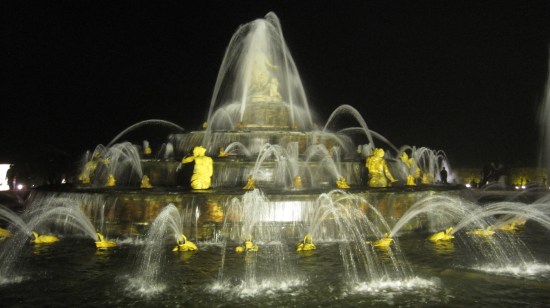
Paris is enchanting anytime, but especially at night. Pro-tip: the light show in the gardens at Versalles (a short train ride outside Paris) in the summertime is total magic.

IMG_1731

3. Prague

I’ve written some about my time in Prague. This was a function of time+place, and there’s a full-length book that will emerge someday from my two years living there. I could be walking to work any day and see some architectural detail I’d never noticed before. Or look up (instead of down at the cobblestones) and see what I’d seen many times before, but my mouth would still drop open in disbelief at the beauty and grandeur.

4. Safari in Africa

IMG_20180503_054819

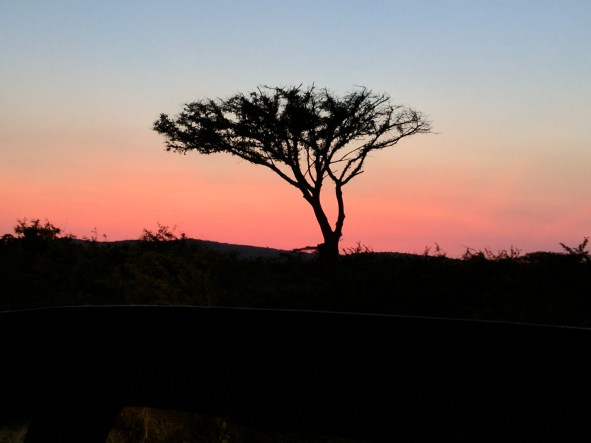
It could be Kenya, Tanzania, South Africa, Botswana, Malawi or Zambia. You pick. There is nothing like seeing these great creatures living undisturbed on their own lands.

5. A quiet beach

Take a trip and find your spot, away from the crowds. My two favorites were in Costa Rica and Dominica, but beyond that I won’t specify. You have to find your own. On a vacation without an itinerary and with a malleable return date.

6. Oktoberfest in Munich

It was 1996 when I first went, and then returned a couple years later, so I can’t attest that the raucous, multi-cultural vibe remains the same. This experience merits its own post, but it would be rated R and names would have to be changed to protect certain people. You know who you are.

7. The Grand Canyon from the air

I was a seasoned traveler, even hardened, but when I flew over the Grand Canyon my jaw dropped open and stayed that way for a while.

8. Mount Sinai at sunrise

This is the moment captured in the photo at the top of this post. My aunt and I awoke at 3 a.m., as the local residents said we should, without a plan. We walked from our camp with its two dozen or so cabins in the desert, following the road out until we found other people on the pilgrimage. People were already out walking at that hour and the numbers grew throughout the night. We walked by a few homes and businesses. Villagers were up early, watching us, and we stopped a few times to ask where we were going. We chose a less trafficked, but steeper path up. Along the way, we hired a man for a few dollars to guide us. It was dark and cold and the path was steep and rocky, eventually heading nearly straight up. There were a few huts on landing areas on the way, serving tea and snacks. Our guide basically ended up pushing my aunt most of the way up the hill by her butt. He still turned around to give me his free hand to grab at times. We wouldn’t have made it without him. At the top, travelers from all over the world gathered and we set our gaze on the eastern horizon. We waited through hushed utterances of “what time is it?”, “which way?” When the sun peeked over the horizon, there was an audible gasp from the crowd, including me, and the sounds of shutters clicking and clapping all around. I am not a religious sort, but it was such a spectacle (nee miracle?) that it was easy to see why the ancients believed this was a holy place and why it inspired belief in gods.

9. Macchu Picchu

If you plan to go, keep an eye out as closures have been discussed.


Where were your most memorable experiences?


What to Eat in Paris (it’s probably not what you were expecting)

1433

Chez Hannah

It will come as a surprise to no one that Paris and food go hand-in-hand. There are countless books and articles and blogs dedicated to the topic, and if there aren’t poems, then there should be. An easy internet search or a conversation with a Parisian will get you quickly to the best baguette, croissant, macaron, cheese shop, caramel, crepe, fries, butter, ice cream, escargot, hot chocolate, praline, tomato tart, … well, you get the idea.

I recommend that you put falafel on the top of your list. It is worth a journey or a detour. The Rue des Rosiers in the Marais neighborhood is the center of Paris’ falafel district, with several falafel places within sight of each other. L’As du Falafel makes everyone’s lists, including this post by Serious Eats. You’ll enjoy a wonderfully satisfying meal, but the lines there are usually long, sometimes down the block. I’m sure that is aided by the photos posted of celebrities, such as Lenny Kravitz, eating there.

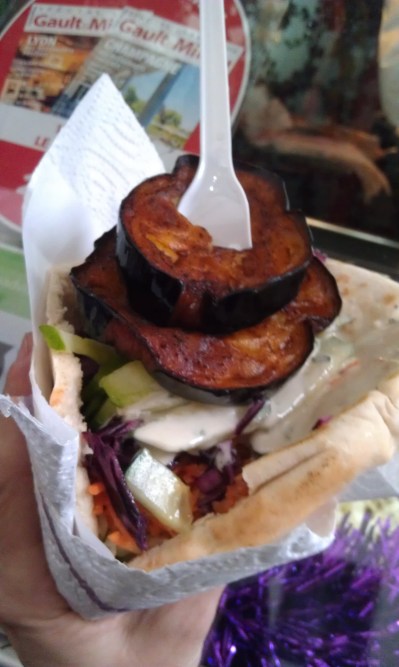
However, I skip L’As and head down the block to Chez Hannah. At all the falafel places, you can order your sandwich as you wish, with a choice of toppings. I order Chez Hannah’s hot-out-of-the-fryer eggplant, which is piled on the falafel balls, vegetable slaw, and tahini sauce. The mix of warm, cool, crunchy, and creamy is heavenly. One pita sandwich is probably big enough for two and a half meals.

Warning: although you can walk around with the stuffed pitas, sit in the restaurant or find a bench, or you risk losing half of it down the front of your shirt. You do NOT want to do that.


Grabado

IMG_20190803_140907

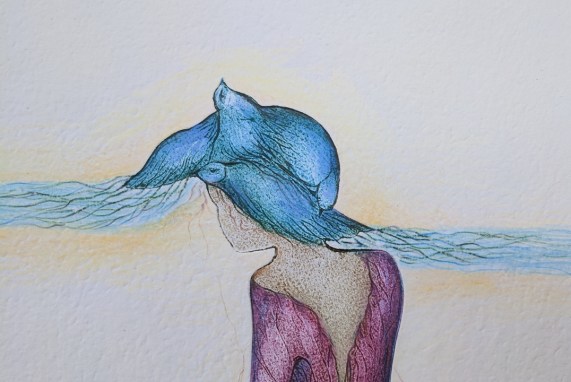
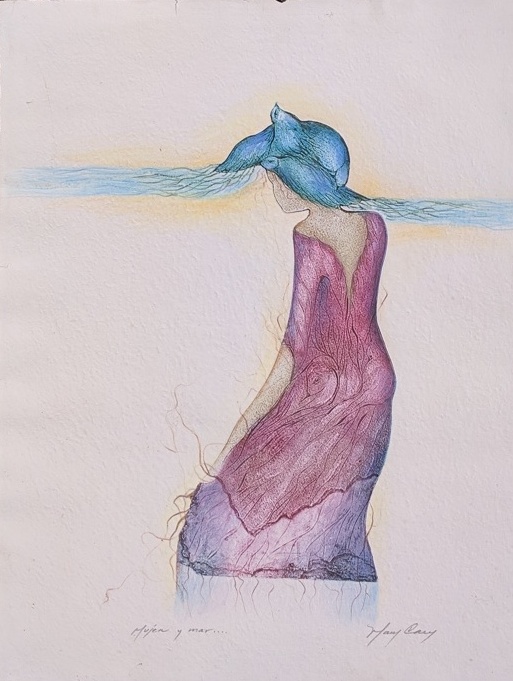
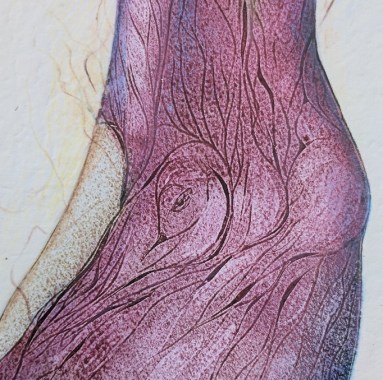
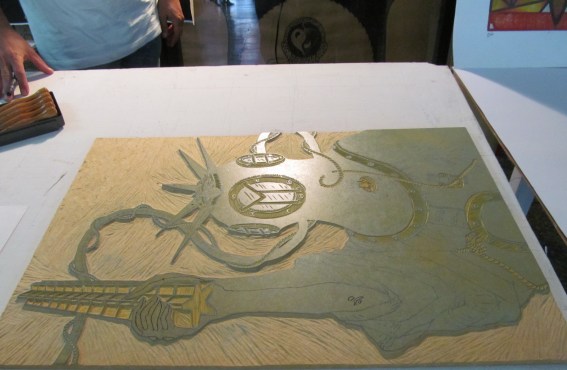
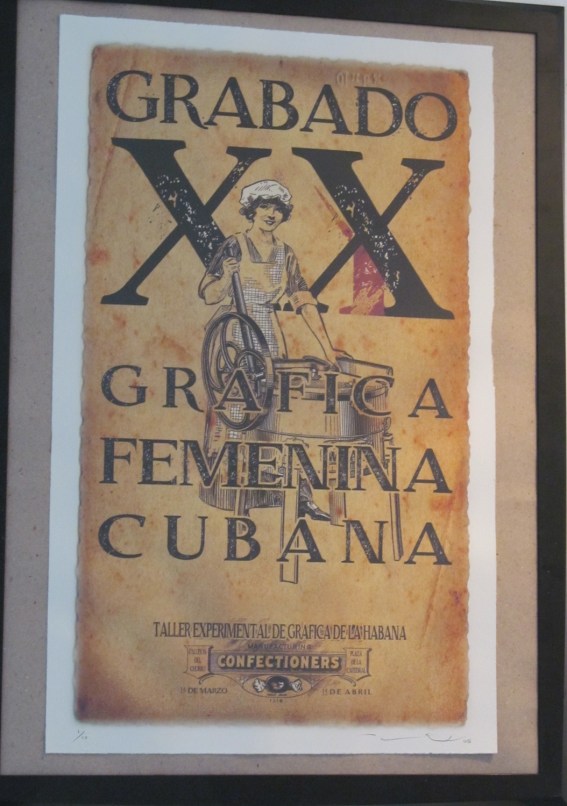
I have discussed previously what a feast of the arts Cuba is. This post is on the Cuban art of grabado — translated roughly as engraving. This piece above, zoomed in, is an original grabado print I bought there. It’s on a homemade-looking paper, something like thick watercolor paper. You can’t tell from a photo, but there is carving where you see lines. For example, the line around the woman’s face, chin, and dress is carved into the paper. Here is the full piece:

IMG_20190803_140720

It’s fairly big at around 17″ x 21″. The salesperson rolled it loosely and put it in a cardboard tube for me to get it home. When I arrived home, I took it out of the tube right away to lay it flat.

Only after I started taking photos, did I notice the bird theme from her headwear etched into her dress as well:

IMG_20190803_140915

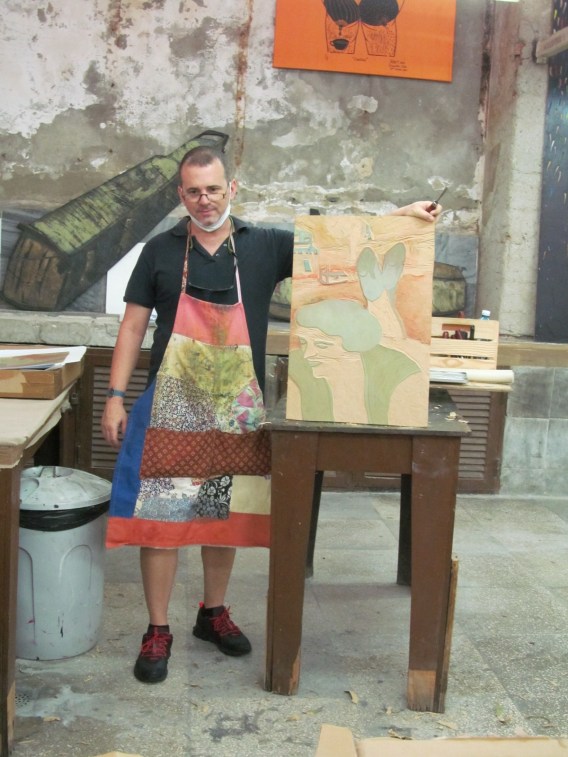
The Taller Experimental de Gráfica is an open, factory-like setting where you can wander around various artists’ stations, see them work, and purchase items. I recommend a visit while you are in Havana. I bought this piece, entitled “Mujer y Mar”, at their well-stocked shop. I love it!

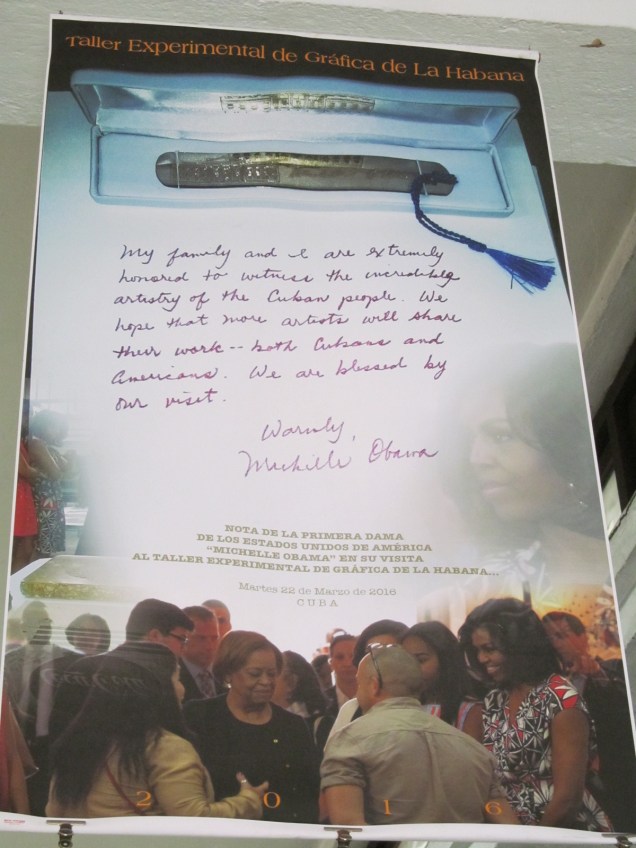
This huge banner, suspended from the second floor, greeted us at the entrance:

IMG_1137

As you can see, Michelle Obama was there, actually, the day before we were! The Obamas were visiting Cuba during our trip. This was not planned (we booked many months in advance) and some of our plans were disrupted by the security, but it was an exciting and optimistic time to be in Cuba! A couple of times while we were there, Havana’s streets started to crackle with excitement, people walked quickly in one direction as a small crowd gathered and followed, and a few people in the crowd took out their phones. After a few minutes of waiting with them, Obama’s motorcade drove by. I have no idea how they knew he was due. Ahh, those days…

IMG_1139A grabado artist’s work in progress

IMG_1143 copyA plate ready for printing

IMG_1136Celebrating women artists as well

If I had a list of top 5 places to go, but I don’t :-), Cuba would be on it. The architecture is grand, but crumbling. Embrace the atmosphere and wander the streets. You’ll find murals, sculptures, and music playing everywhere. The food is fresh and inventive (I heard this is an improvement from years past). The streets are an open-air art museum. The people, who have been subjected to so much suffering over the decades, are friendly and curious. Crime rates are low, health care is good quality and cheap, and there are many miles of unspoiled coastline and rainforest.

As of this writing, it is still possible to visit Cuba legally under the “support for the Cuban people” category, and others.

We took a tour with CET (in late 2016). There were 15 of us, all from the U.S. The cost was high, but I had a good experience with them. They keep on top of the latest regulations and are active advocates for the Cuban people.

Shortly after my visit, an art teacher-acquaintance of mine moved from the U.S. to Cuba to make it her home. Once there, Laura founded a travel company, CAA, that she now runs with her Cuban husband, Yasser. Their prices are more moderate, especially if your group includes a few people, and they will work with you to customize an itinerary.

If you’ve been on the fence about traveling to Cuba, I say do it!

French food: Brittany, home of the crêpe

… and the galette.

galette k

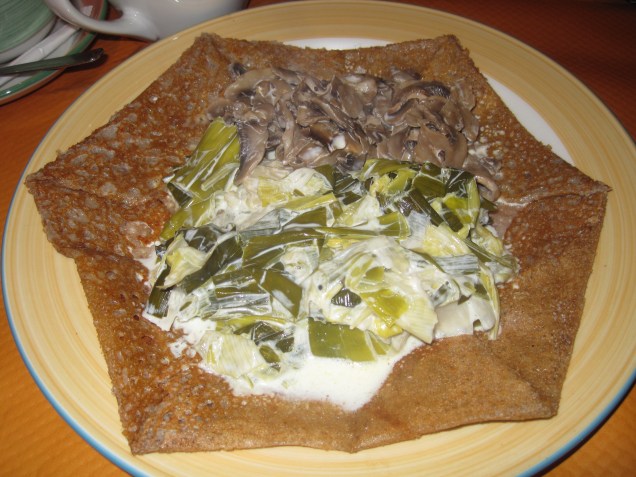
Galette with leeks and mushrooms

IMO, you can never go wrong on a visit to France. I visit Paris any chance I get. It took me quite a few visits to venture outside of Paris and I am glad I did. Thus far, there has not been a bad decision in the lot.

A few years ago, I visited the Brittany region. Breton is both the name of the region in their language and the language itself, though most Bretons speak French. They are a Celtic group and you will experience a unique culture here different from other parts of France, including a strong nautical feel. Anthony Bourdain visited for a No Reservations episode and he ate a LOT of seafood. (Anthony, we miss you.)

But onto the wonderful galette…

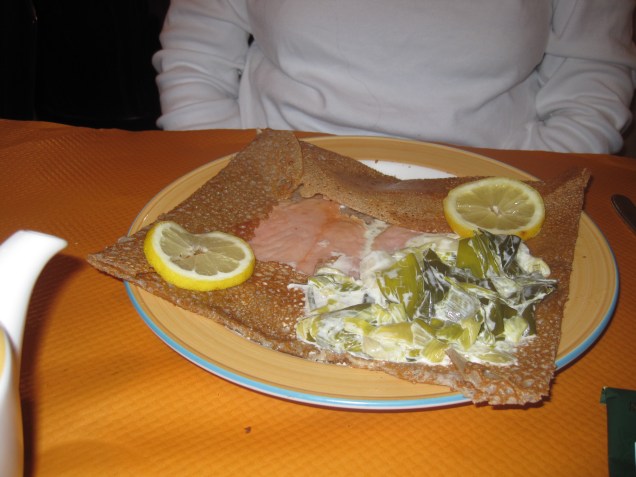
They are commonly eaten as the dinner meal, but feel free to have one any time. They are huge and make a whole meal. This picture, with my mom in the background, gives you a sense of the size:

galette bert Galette of smoked salmon and leeks

Notice hers is square and mine (the first photo) is hexagonal 🙂 They like to do that. We could not finish our galettes and had to leave some behind.

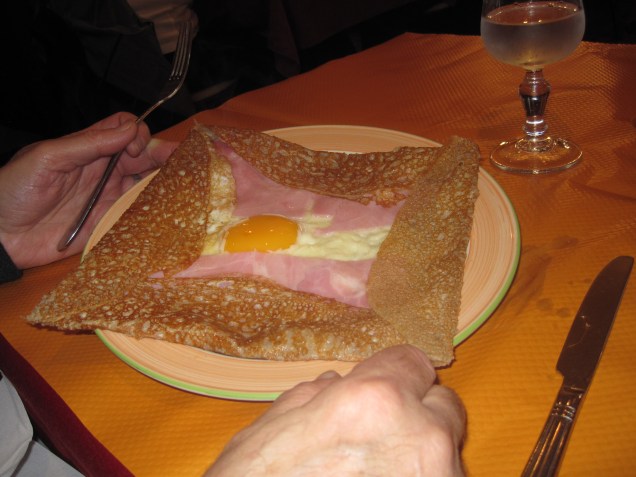
galette fred

My dad had fried egg and ham. It’s bigger than the angle shows here. He was full.

Galettes — unlike crêpes — are made with buckwheat flour. They have bit heartier flavor and are gluten-free! Apparently there is a debate raging about galettes vs. crêpes that you can read about here.

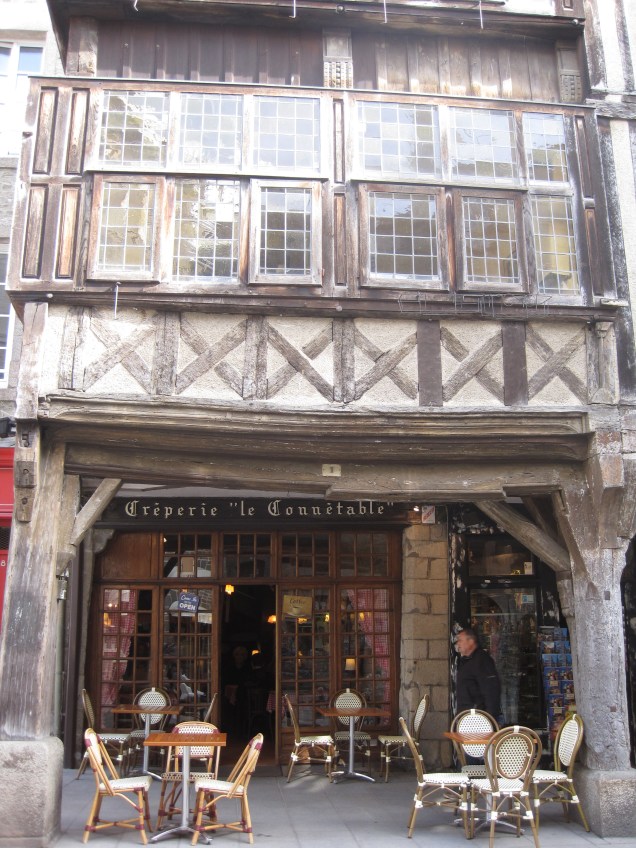
dinan 15 (1)

Dinan, France

This is the outside of the restaurant that produced our galettes. The whole town is lovely and full of these medieval half-timbered buildings.

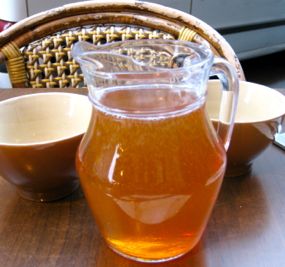
A couple more notes on food and drink: a very drinkable hard cider is consumed throughout the region, with galettes or without. It’s usually dry, but you can inquire about which varieties they have on hand.

cidre_2449

photo credit: francetravelplanner

It is imperative to leave you with this one last photo.

st malo 11

In St. Malo, 40 minutes from Dinan

St. Malo is also the setting for one of my very favorite books, All the Light We Cannot See by Anthony Doerr. Read it before you go!


Recommended Reading

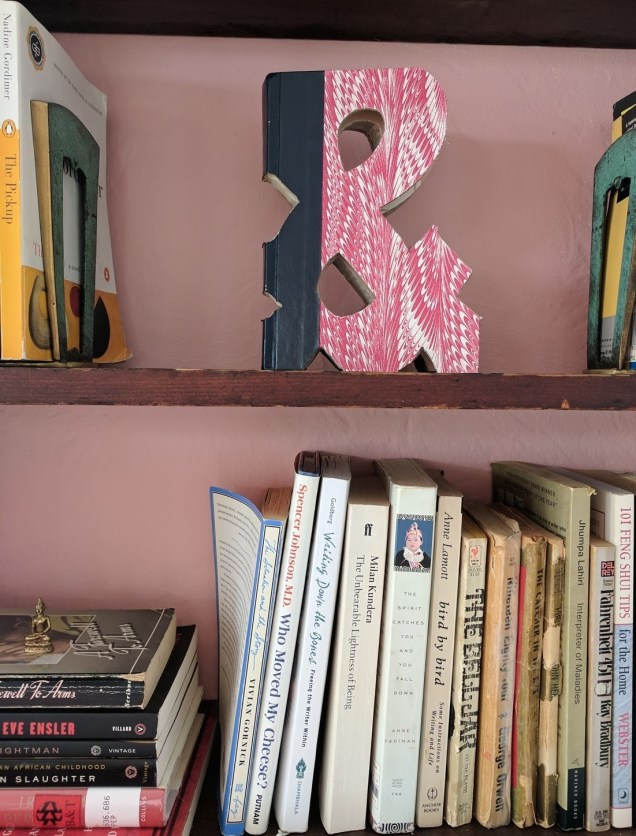
IMG_20180715_104918Ampersand book art!

When I travel, I like to read books that are set in the place I am going or while I am there. Here, I am talking about creative writing (e.g., novels or memoirs), rather than guidebooks, but a comment on those first…

Earlier in my travel life, I read guidebooks, sometimes cover to cover, to plan out my itineraries. They are an indispensable resource, unless you book a tour and your human guide is serving that purpose. Even in the internet age, I still find guidebooks a much better medium and far more thorough than pages of printouts from articles, top 10 lists, and discussion groups. I like the books that have a combo of words and visuals and are opinionated, particularly an easy to scan rating system e.g. 1, 2, 3 stars. Two of my favorite publishers are not the biggest names you hear, but depending on your destination, check out: Bradt and Moon to see if one is available. And when I lived in Prague, the Time Out guide was an indispensable reference.

Now onto reading for pleasure and learning.

I love books that have a strong sense of place. A book can be particularly meaningful if it’s a place I know, however it’s not a necessity. A strong writer can depict a full and satisfying multi-sensory experience of a place.  Whether I have been there or not, I can still feel like I am there. I am also happy if I am learning something, say, about the history, some key event(s), or culture of a place. If you happen to feel the same about reading, here are some of my favorites, in no particular order:

West With the Night by Beryl Markham (Kenya and flight beyond it) – Markham, an early aviatrix shares incredible descriptions of a Kenya that is now lost to development and hunting/poaching. Her equally vivid descriptions of early flight are remarkable.

We Wish to Inform You That Tomorrow We Will Be Killed With Our Families by Philip Gourevitch (Rwanda) – a definitive read about the lead-up and events of the Rwandan genocide. Gourevitch is a journalist, which enough is usually a strong indication that you will get a thoroughly-researched and well-written read.

Mountains Beyond Mountains by Tracy Kidder (Haiti) – the backstory and rise of Paul Farmer, one of the most influential public health figures today. Kidder is a Pulitzer-prize-winning author. These are both reasons enough, but it’s also an informative and moving piece of work.

Serpent and the Rainbow by Wade Davis (Haiti) – the book, not the movie. (I cannot be held accountable for the movie, which I have not seen and I understand was only loosely based on the book. It’s classified as horror genre, which the book is certainly not.) A fascinating journey, rarely glimpsed by those of us from outside Haiti, written by a scientist whose research eventually brings him into the voodoo culture of Haiti and lives of people who practice and participate in it.

Before the Knife by Carolyn Slaughter (Botswana) – I have never been to Botswana, though I have spent time in southern Africa.  Slaughter grew up there during the last years of colonial rule, with a father who was a British officer there and more than a bit of an assh0le.

Ladies No. 1 Detective Agency by Alexander McCall Smith (Botswana) – a fictional detective series with a strong female lead character. (I loved Nancy Drew books as a kid:-) I read the first 5 or 6 of the books and they’re delightful. It was made into a television version that I have not seen.

Born a Crime by Trevor Noah (South Africa) – I have been there, as a tourist, but Noah grew up in parts of the city that most tourists do not see. I was quite surprised at how much I enjoyed this book and learned about Noah’s frankly refreshing views.

Snow Flower and the Secret Fan by Lisa See (China) – See is a Chinese-American fiction writer. I’ve loved her other books that I’ve read as well. She does an outstanding job of creating an intimate world that’s a different place and time.

Oracle Bones by Peter Hessler (China) – Hessler is an American teacher living in China at the time, so you’re getting an American’s perspective on the changes happening there, but he’s an informative and interesting writer. I liked this one better than the also well-reviewed River Town.

A Thousand Days in Venice by Marlene di Blasi (Italy) – short, delicious book by an American expat about Italy, food, and love. I admit I did *not* find her earlier book about Tuscany to be as delicious.

There are so many more, but I’ll stop here. Book Lust to Go, by librarian Nancy Pearl is a whole book with recommended books to read organized into cities, countries, and other topics.

I like to buy books for the sheer pleasure of having them on my shelves 🙂 so here are a few sitting on my shelves that I have not read. If you’ve read any of them, please comment:

  • A Case of Exploding Mangoes by Mohammed Hanif (Pakistan) – about the plane crash that killed the then-president
  • Video Night in Kathmandu by Pico Iyer (Nepal, obviously)
  • The News from Paraguay by Lily Tuck – I’ve never been, but why not?
  • The Hungry Tide by Amitav Ghosh (India) – though someone told me Bangladesh, which was why I bought it, as I was living there at the time.
  • Midnight in the Garden of Good and Evil: A Savannah Story by John Berendt (Georgia, U.S.A.)
  • Travelers’ Tales  Prague and the Czech Republic: True Stories by various authors collected by various editors. I have Travelers’ Tales Paris: True Stories as well. That I haven’t read them yet does not indicate my level of passion for both places. On my shortest list of favorite places, these two are on it.

Do you have any recommendations?


Beijing Does Food Right

1152-IMG_1038Celebrating a double bat mitzvah at the Great Wall
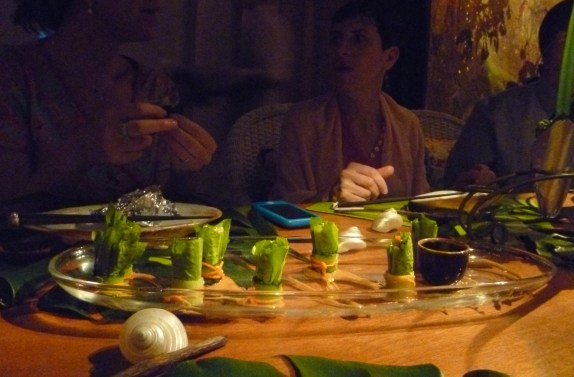
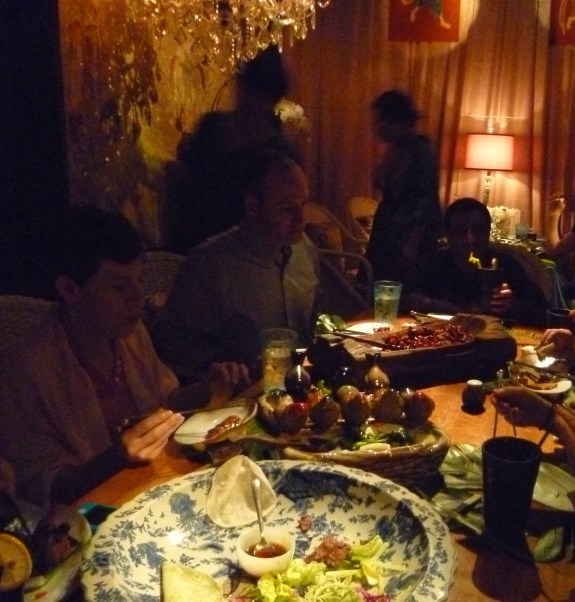
We ate REALLY well in Beijing. From the moment we arrived, we ate and drank our way around the city. In every photograph from the trip, we are eating or drinking: savoring a glass of wine at an outdoor cafe, slurping from a punchbowl of soup at a neighborhood noodle house, making a second (or third) trip to a buffet, or trying to find more room for yet another course at the bar mitzvah (above).

As a vegetarian, I had no problem eating anywhere, whether the restaurant was elegant or casual. Everyone seemed to understand the request.

There were many memorable food experiences. I’ll share just two of them.

A standout among standout meals was delivered by the vegan-only Pure Lotus. We arrived on a bright sunny, afternoon and immediately removed our sunglasses. The place is dark, mysterious, and moody. It was decorated with crystal chandeliers, porcelain buddhas, filmy fabric panels, Victorian lamps. Screens lined the walls with black and white lotus flowers and petals floating across them.

We were a large group with only two vegans, but no one missed out on anything and everyone was delighted. Our efficient team of servers brought course after course and removed empty dishes promptly. They started with tropical juices, moved through artfully-presented salads and appetizers, main courses. Among the main courses was a vegan version of Peking Duck. The meat eaters had ordered it multiple times before, so I was glad to sample that.

P1000347

P1000348

We were so full we declined the desserts. Pure Lotus was pure heaven, but of the high-end (expensive) type. I went back the following night with one of my cousins and we ordered only the dessert course:-) (Note: if you are flying to Beijing specifically for this restaurant, and I recommend you do, do some research first. Happy Cow, a vegetarian/vegan website for recommendations worldwide, lists Pure Lotus as closed. There are some reviews on the larger search engines that get confusing, but there seems to be some cross attribution between a Pure Lotus and a Pure Lotus Vegetarian.)


Another experience to consider — and this applies to many places — is a cooking class. Again, it was easy to find a vegetarian option for this in Beijing. There were a number of companies offering cooking classes in the Beijing’s old-style neighborhoods, called “hutong”. One way to experience a hutong from the inside is through a cooking class.

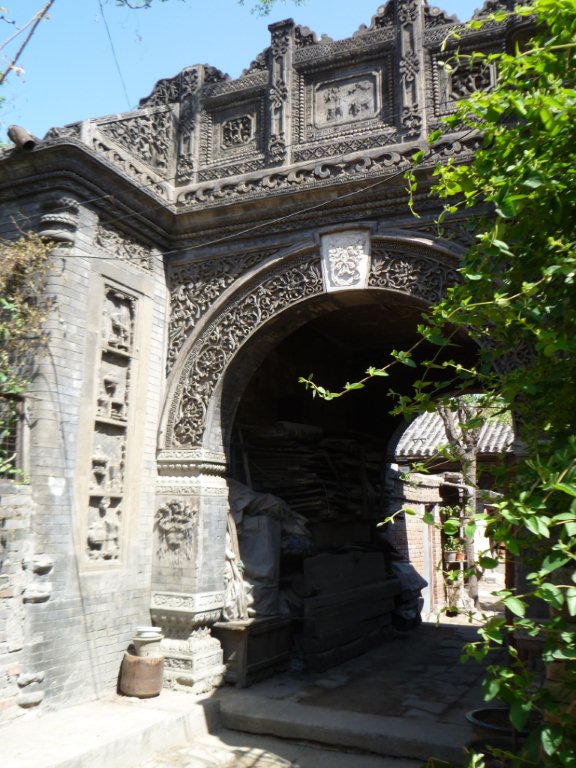
P1000425Ancient gate marking the entrance to the hutong where our cooking class was held
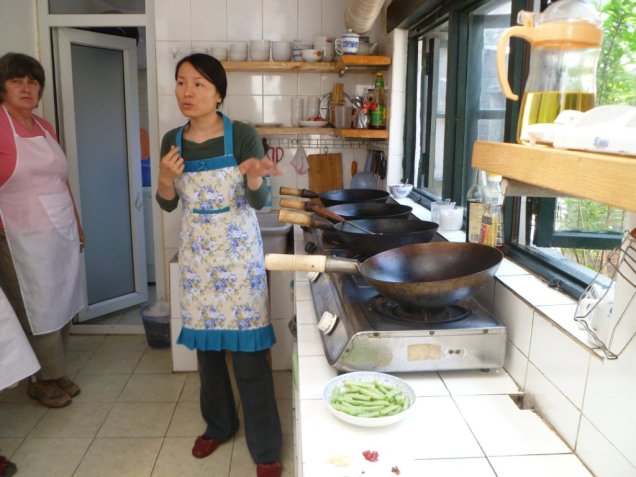
There were five students for class: three in my party and a young European couple. We stood around a table in one room for instruction. We chopped vegetables and mixed our sauces before moving to the kitchen.

P1000436Our lovely hostess warming our woks. She had white rice already going in a rice cooker.
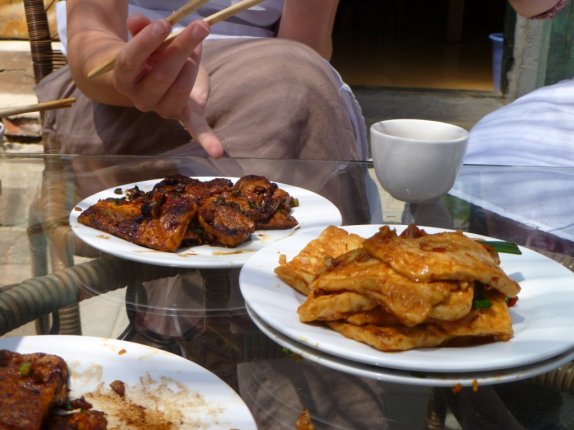
P1000439Tofu prepared three ways!

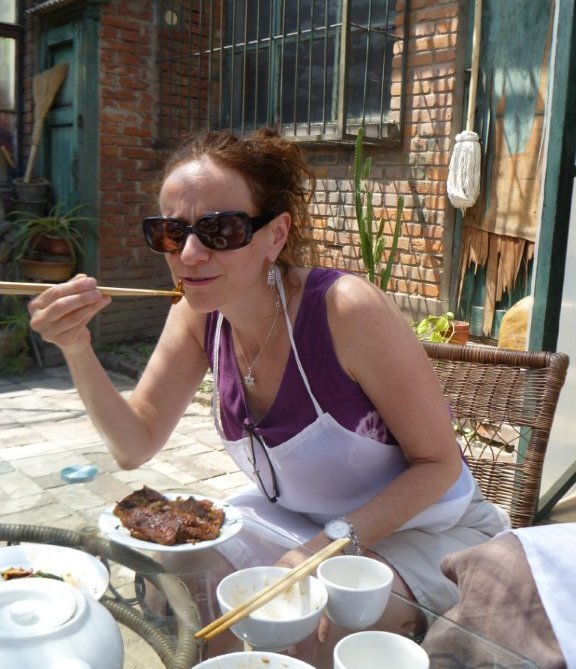
P1000440We ate the results, with tea, in the small courtyard outside.
The landscape of old Beijing is rapidly disappearing as the authorities destroy these old neighborhoods, dating back to the 13th century, to make way for modern architecture. Reports say 90% of hutongs have disappeared over the past 20 years. Countless families have been forcibly displaced, along with their way of life and social structures. It’s quite sad.

Hong Kong Before China

Park Hotel brochure

As I write this, Hong Kong is in the news. There have been massive protests on the streets by some accounts, the largest the world has ever seen. Since Britain returned Hong Kong to China in 1997, there has been significant change there, no doubt. However, Hong Kong has its own set of rules, allowing the people to enjoy some freedoms those in mainland China do not. The center of the June 2019 protests is a fight against extradition to mainland China of Hong Kongers suspected of crimes. For the people of Hong Kong, the prospect of facing China’s system is enough for great numbers of them to take to the streets.


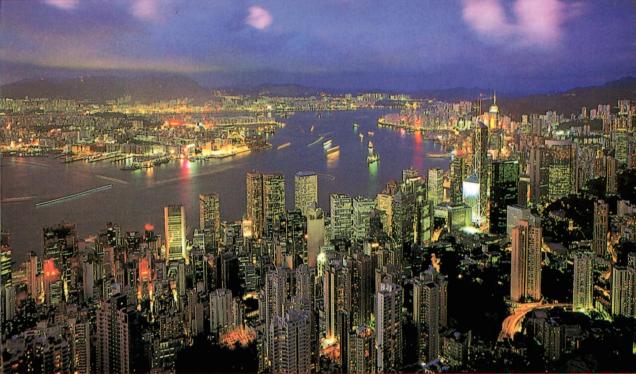
I was fortunate to visit Hong Kong in a different era. It was 1991 and Hong Kong was still ruled by the British. It felt very much un-British-colony-like and very much like free Hong Kong. Indications of the British were noticeable in the form of high tea at the hotels and bi-lingual signs. (We did not see those on our visit to mainland China that year.)

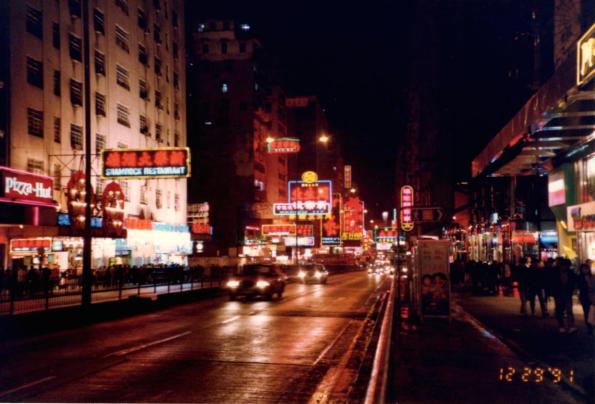
nightIn my grainy photo from 1991, note Pizza Hut at the left of the photo and a blurry “Shamrock Restaurant” sign to its right.
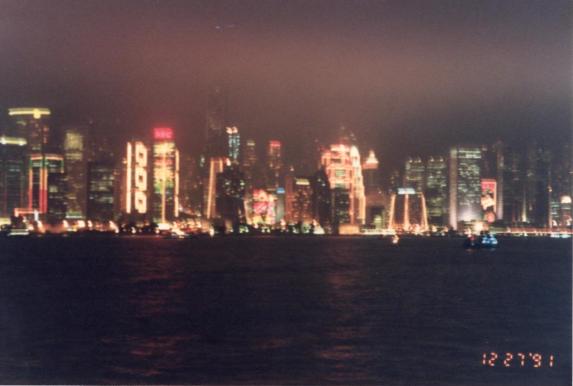
In 1984, seven years before my visit, Britain had agreed to return Hong Kong to China, so everyone knew it would be going back in 1997. Back then, China was mostly a mystery to those of us in “the West” — still quite closed and with its industrial revolution just beginning. In connection with the transfer of Hong Kong, China agreed to a “one country, two systems” policy. But Hong Kongers and the rest of the world were still waiting to see what would happen. There was a good deal of anxiety.


On Christmas Day, 1991, we flew into Hong Kong’s Kai Tak Airport. Kai Tak was closed later to make way for a larger airport, but to my eyes, it was completely modern. My partner’s parents were living in Japan at the time, so, along with his younger brother and girlfriend, we all met in Tokyo the night before to partake in a hazy, jetlagged Christmas Eve dinner at the reasonably-priced, but very Western New Sanno Hotel. (The New Sanno is for U.S. military travelers so for everyone else, no dice).

The next morning, we took a shuttle bus to Narita Airport. As we were bound for Hong Kong, I was practically bouncing off my seat, annoying everyone else, who wanted to sleep.

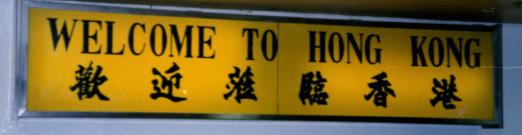
Kai Tak Airport was known to be one of the most challenging landings in the world for pilots. On the approach, planes had to fly very low over the skyscrapers on the Kowloon side of Hong Kong. We made it fine. Hong Kong immigration officials placed a royal-looking stamp in our passports (the seventh one in my collection) and we were greeted by this sign:

welcome

In advance of the trip, I had read my guidebook cover to cover, dog-earing pages and highlighting sights, markets, and shrines I wanted to visit. The guidebook had informed me that the period around Christmas and the New Year is a festive time in Hong Kong. Only a small percentage of the population was Christian, and it was my first Christmas party in an Asian country, but not my last.

By the time we arrived at the Park Hotel, one of the many sky-high buildings that cluster on the Kowloon side of Victoria Harbor, it was dark. I could feel the electricity in the air as we alighted from the airport taxi.

Everyone in my group was tired, but I was pumped with adrenaline. When everyone retired to their rooms, I was taken aback that no one wanted to join me. I could not even imagine sleeping. Why sleep? We were in Hong Kong before it was China and there was a party outside.

I left my suitcase and purse in the hotel room, stuck the room key in my bra, and went out into the strange, new city alone. At 22, I had already acquired the habit from college in Washington DC of not carrying a purse on city streets. But at that age, it was uncharacteristic of me to do anything alone.

Hong Kong! Bright, loud, and too tantalizing to miss. At that hour of the night whatever it was: 10, 11, 12 midnight — it seemed the entire population of 5+ million was out on the streets. People of all ages gathered in small parks, strolling, talking, and laughing. Toddlers careened around the city sidewalks littered with confetti and spent party favors. Fireworks exploded in the night sky while kids waved sparklers, lighting up each other’s grins. Senior citizens sat chatting on city benches as small firework fountains danced near their feet. Strangers smiled at me.

I had left my camera in my room as a safety precaution  one that was unneeded. But I knew that photos wouldn’t capture the nighttime festival, especially on my instant camera. A camera still can’t show joyful chit-chat, faces lit in a split-second of fireworks, smells of burnt toast and scorched marshmallows, and easy laughter.

I don’t know how long I wandered around the streets in a daze, marinating in the scene. No one seemed to be going home anytime soon. Eventually, I had to surrender to the jetlag. Back at the hotel, I descended into a deep restful sleep until my body allowed me to wake again. I missed the breakfast buffet the next morning.

dinner cruiseView from our harbor cruise on the Pearl of the Orient
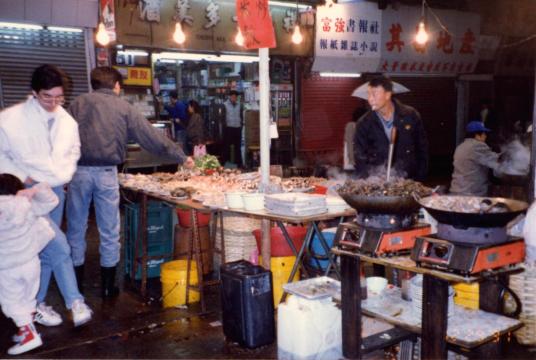
We spent a week in Hong Kong. It was was an amazing riot of Asian and British cultures. Lanterns and streamers festooned the streets. Charcoal grey worsted wool adorned Asian and English businessmen. English was spoken freely in the broad avenues, shops, and restaurants. Among modern, grid-like neighborhoods, pockets of narrow, jumbled market streets cropped up, offering colorful craft shops, steaming drums of soup, and seafood laid out in icy sidewalk bins.

fishThe shellfish was so freshly harvested from Victoria Harbour, it still pulsed. I stopped eating it.
When I got home and sent in my film cartridge to be developed, the developer lost it. I was very upset, as it was still early in my travel “career”. So I have very few pictures of Hong Kong and it is mostly left to my memories. In them, it is always nighttime and there are bright lights and fireworks. It’s fine with me.

~~~

Note: while researching this piece, I found this interesting story about Kowloon’s former lawless squatters’ city within a city. This place was not mentioned in my guidebook from 1991. The squatters’ city was demolished in 1993, but it is the type of site I would visit today. I wrote about a small squatters’ community in Addis Ababa here.


Printing and Displaying Favorite Photos

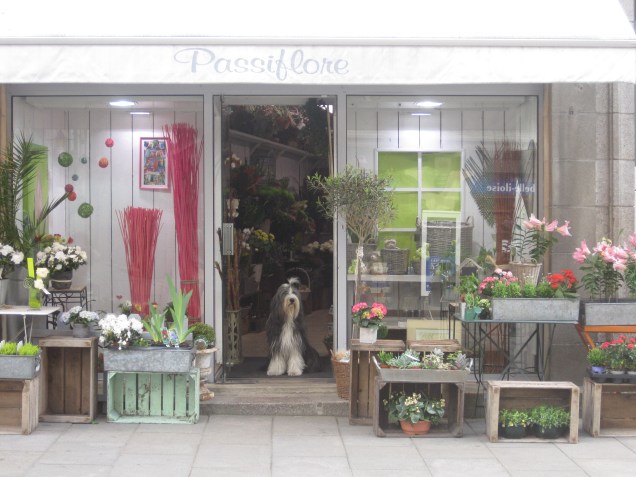
dinan 16Sheepdog monitors a flower shop in Dinan, France
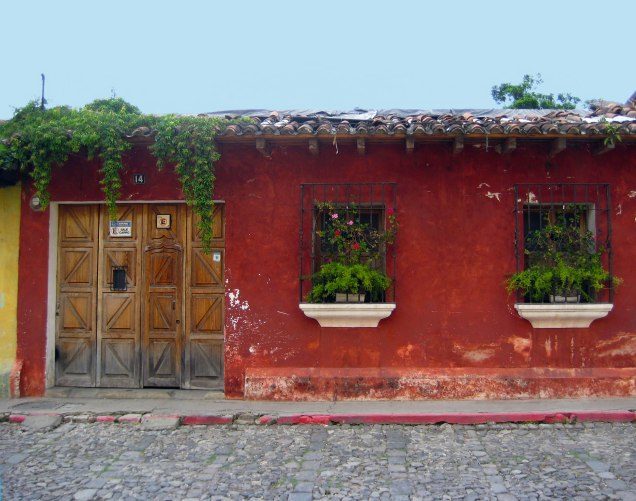
I have written in the past about cheap and light souvenirs to bring home from your trip. Photos are fantastic souvenirs. They are as light as air and just as cheap. If you print them out when you get home and pop them in a ready-made frame, it can cost just a few dollars to display them on a shelf or on your walls. I have had consistently good results using Nations Photo Lab. Upload your photos, select the size and other options, and they mail the prints to you.

Photos are my favorite way to decorate my office. Memories of favorite vacations (or reminders to plan your next one) brighten up a generic office space really fast.

The photos here are my own favorites that I’ve chosen to print and frame.

guatemala 2009 KH (web)Antigua, Guatemala – a heavily touristed town, but full of splashes of color
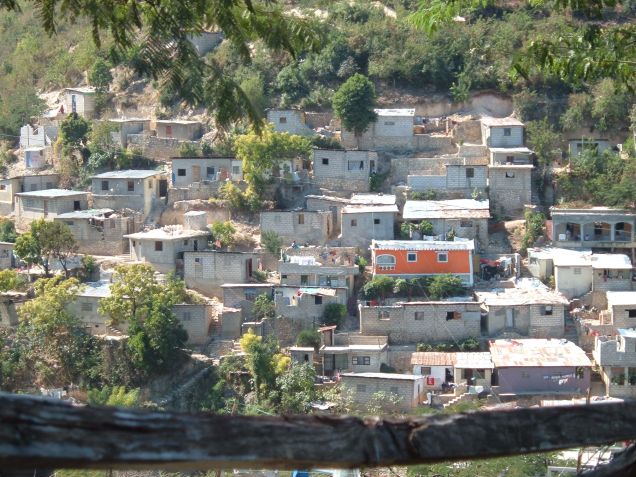
 

Haiti KHHillside around Pétion-Ville, Haiti


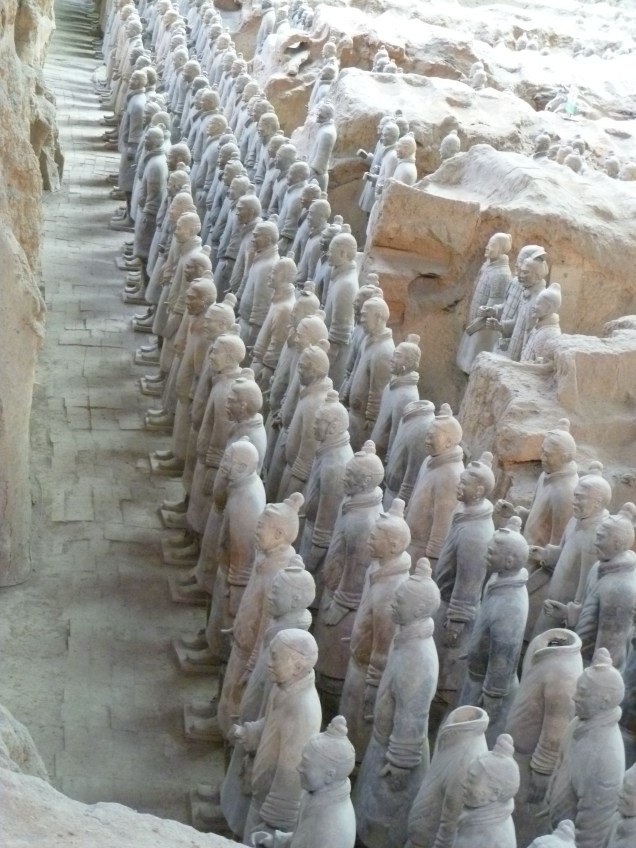
xian china yTerra Cotta Warriors in Xi’an, China


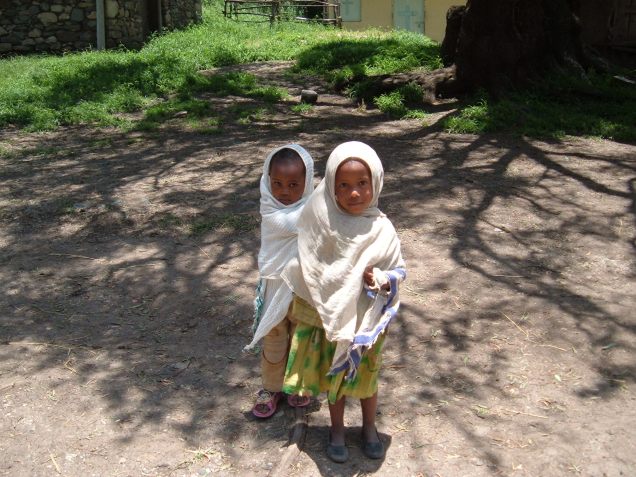
2007_0902ethiopia girls yCurious girls at Adadi Mariam, Ethiopia


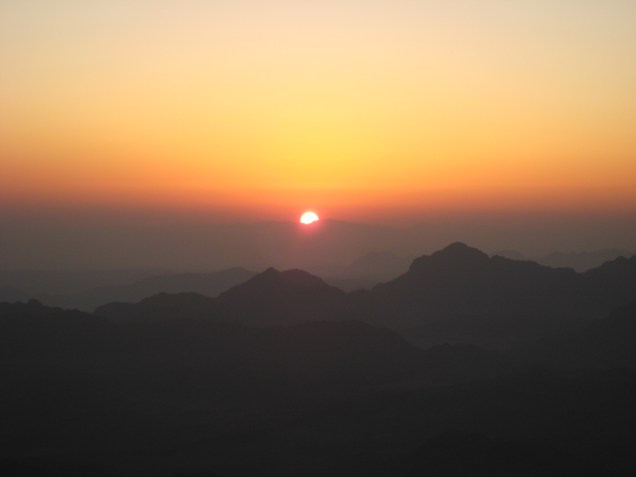
sunrise over sinaiSunrise at the top of Mount Sinai


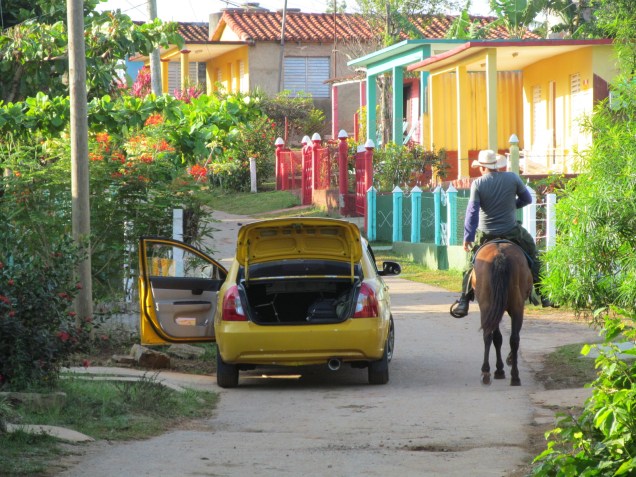
IMG_0981 fave?Cuban Cowboy

Here is a post I wrote about Cuban Art and Framing Tips.

I should mention that the photos throughout my blog are mostly my own. If they are not, I’ve credited the source.

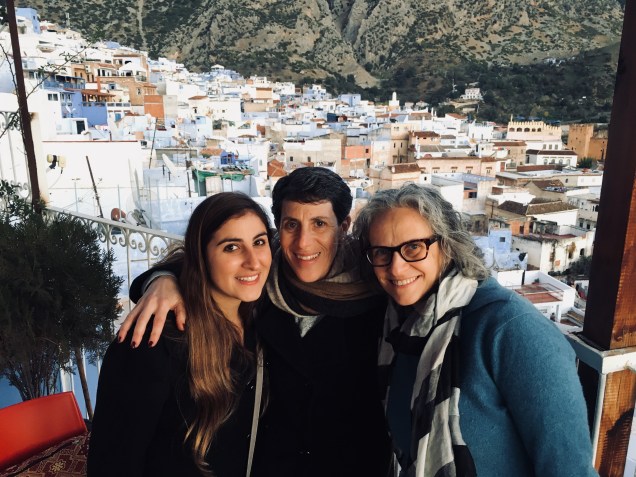
Another option is photo books. In 2018, I created my first photo book with my cousin after our wonderful trip to Morocco with her daughter and daughter’s boyfriend. There were so many colorful photos and wonderful memories, it was difficult to boil it down to the 120 or so that made it into the book. We used Mixbook. We found their website easy to use for uploading photos and designing page layouts. We were pleased with the print quality of the hardcover books we ordered.

IMG_2414Left to right: cousin Rachel, cousin Tammy, me (shot by Dani)
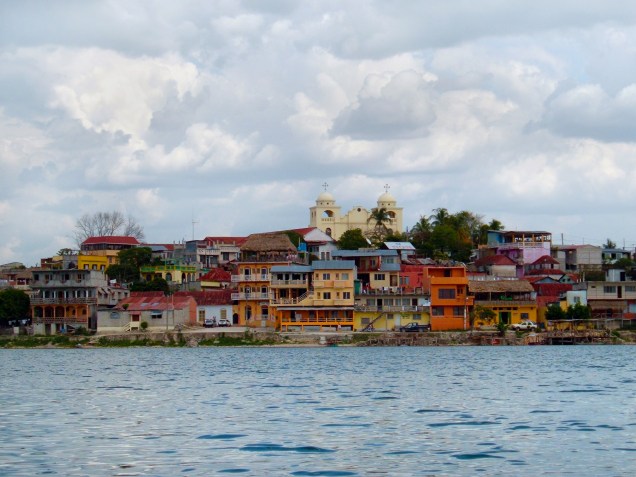
 

Here are more photos that I’ve not printed, but are candidates in the future (if I find space on my walls).

guatemala 2008 KH (web)Flores, Guatemala


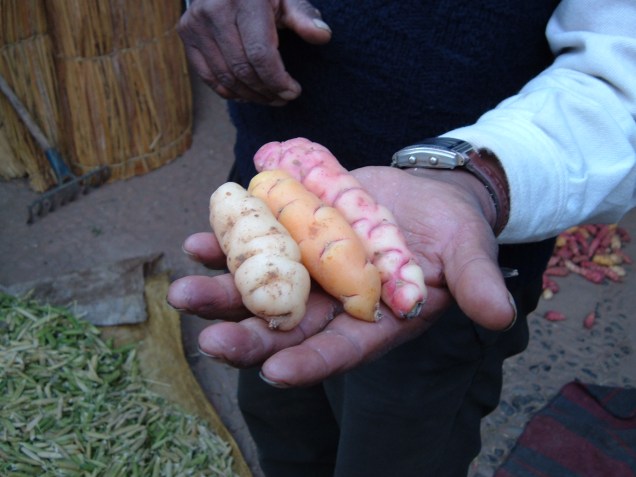
Peru 060 yFarmer grows three colors of potatoes on an island in Lake Titicaca, Peru
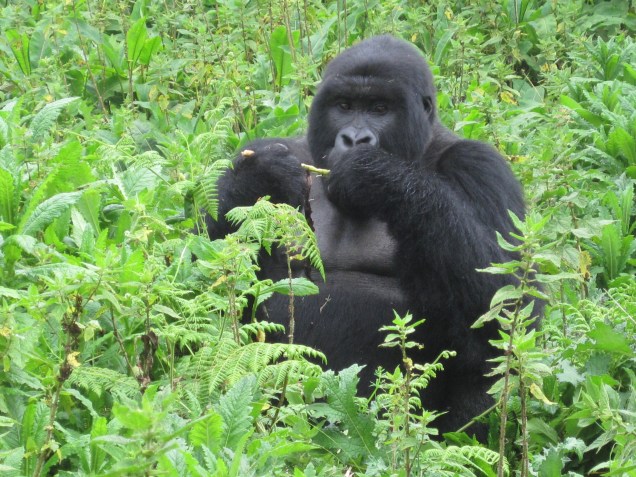
 

rwanda 2Eastern Mountain Gorilla in Virunga Mountains – only 1,000 left in the world
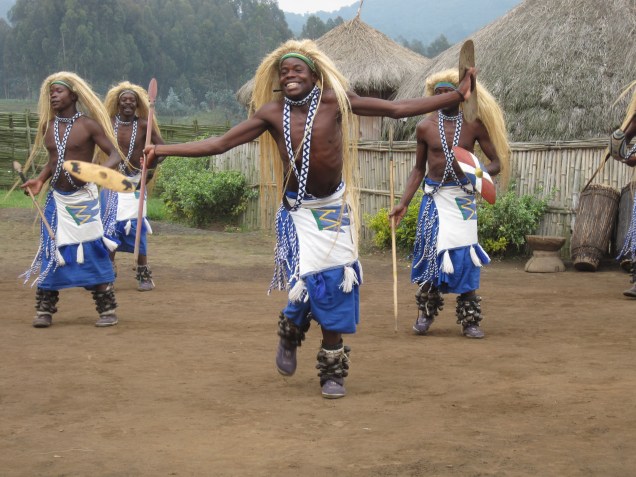
 

rwanda 3Rwanda – dancers were waiting for us when we came down from the mountains

Yup, I got up and danced with them.